

Let’s be straight up with each other: when the average person conjures up a breakfast, the following foods come to mind: crispy bacon, maybe eggs (if you’re a fan), toast (if that’s your thing), and then there’s that one random portion staring up at you on some plates just begging for investigation and thought: black pudding. The sausage that has a backstory before you even chew it. Half the table is leaning in to take a closer look, while the other half is leaning back like it’s some kind of feat.
But what is black pudding exactly? What is it made of? And why does it seem to have an air of controversy compared to, say, a normal breakfast sausage?
The Protein Component
No use beating around the bush: black pudding is a blood sausage. That is the upshot. The main ingredient, as the name indicates, is blood, most often pig, sometimes cattle. But not blood straight from the ladle. The blood involved is dried blood, which helps to preserve it and gives it that deep, almost black color.
Along with that, there are two other fundamental components: fat and cereal. The fat is animal fat, often of pork origin, for richness, while cereals such as oatmeal or barley bulk it out and provide texture. It’s the cereals that create the substantiation, fullness, and helpfulness of the pudding. Perhaps this helps to minimize the vagueness of the idea. I mean, if you have eaten sausage before, the form of black pudding can’t be that different. It’s the idea of the blood.
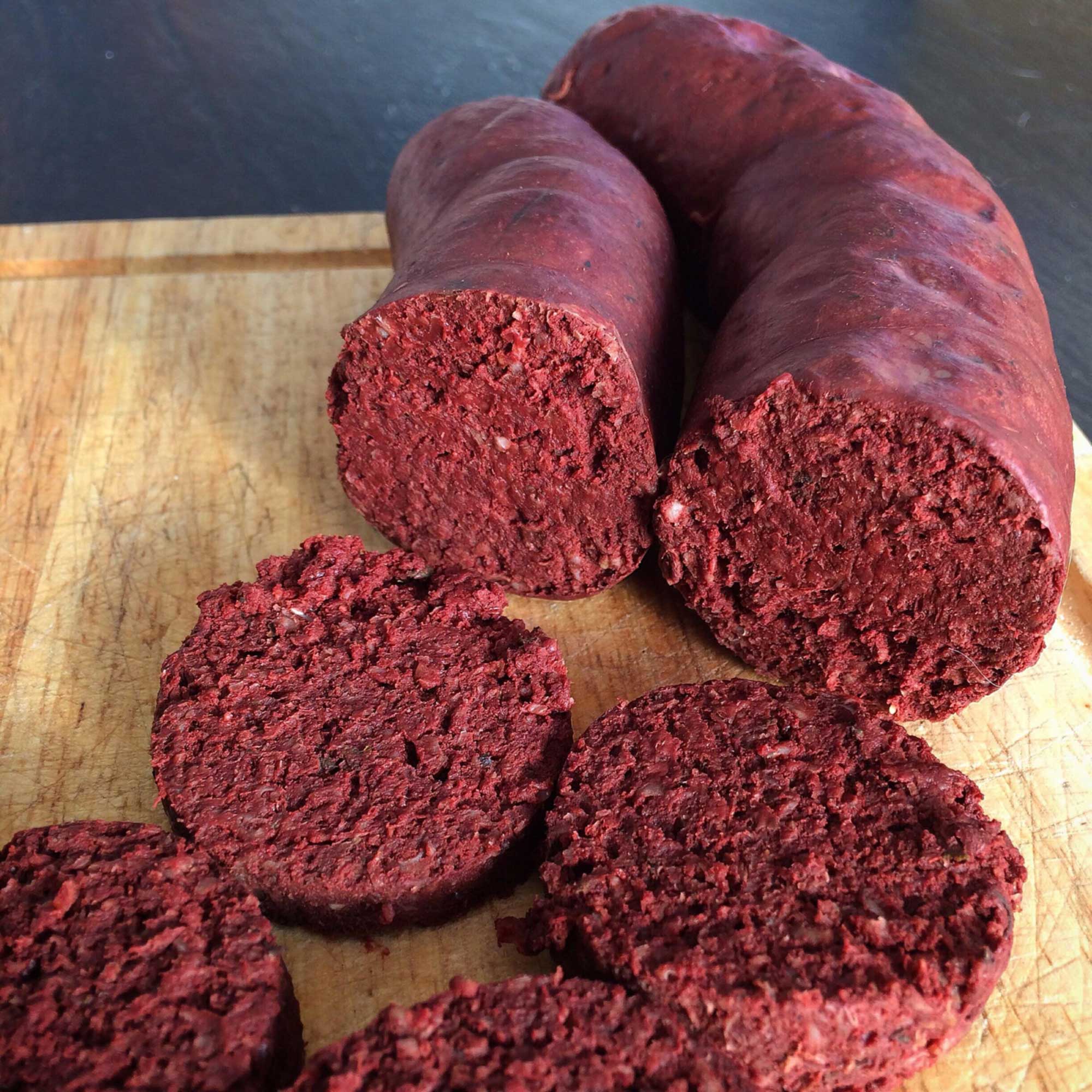
More than the Basic Ingredient
Anyway, obviously, no sausage is complete without flavour. And this is where black pudding becomes obvious. Classic recipes usually use a selection of herbs and spices: nutmeg, cloves, marjoram, sometimes pennyroyal, though that one is a little rarer now. There are various adaptations from region to region. Consequently, the seasoning can range from subtly aromatic to a bit more pungent.
When seasoning is introduced, it changes the foundation (blood, fat, grain) into a layered and rich flavoring. It’s the kind of savory that goes well with eggs and fried bread. Cooking the base without the embellishments would yield something flat. With the seasoning, you have the foundation for the “full English” breakfast plate.
Natural Casings: The Unsettling Detail
Here’s where some people squirm: after the mixture is made, it is stuffed into casings. Traditionally, they have meant pig intestines. Yes, pig intestines. It might sound shocking if you’ve never considered how sausage is made. But it has been used for centuries as the practical, natural vessel for the filling. Intestine fillers have the advantage of being porous enough to allow steam to escape, while remaining strong enough to hold the shape of a sausage.
That isn’t just a black pudding thing, either. Bratwurst, chorizos, Italian sausages, a ton of sausages use the same process. It is one of those time-honoured techniques that has endured because it works. And once you have eaten it, you forget that you are eating it in the first place.
A Dish With History
One of the reasons black pudding survives, in spite of the squeamishness, is history. This is a dish that stretches back to antiquity. Blood sausages could be made by ancient civilizations as a matter of necessity. The idea being, if you butchered an animal, you didn’t waste anything. Meat was valuable, blood was valuable. Mix that with some filler, grains and spices, and you were able to stretch that nutrition even further.

As time went on, cultures put their own spin on it. Spain calls it morcilla, France calls it boudin noir, Germany calls it blutwurst. Black pudding is merely the (unfortunate) identity the British Isles gave to a much wider tradition. Black pudding has stuck around. Not because people were down on their luck, but because we developed a version that is something people enjoy, tied up with regional pride and comfort food status.
Modern Takes and Variations
Today, black pudding retains its traditional roots while also being treated as a gourmet ingredient by chefs. Instead of being simply fried and served next to sliced bacon, it may be served crumbled over scallops. It might also be stuffed in pies, or pulverized and reinvented as a trendy canapé. It demonstrates how you can take what appears to be rustic or even crude and create a dish that’s worthy of a fine-dining experience. This happens just because you’ve realized the flavor of it.
Of course, the notion of eating blood still turns off some people completely, no matter how you decorate it. And that is completely understandable. This is one of those foods that either excites you or makes you shake your head in disbelief.
More Than Just Shock Factor
The important thing to know is black pudding is not a gimmick. It isn’t there for the shock factor, It is an invention of resourcefulness. It has been honed from centuries of experience, taste, and texture. This makes it far more accessible than its reputation may display. It’s savory, a little nutty from the grains, aromatic from the spices. It represents filling and hearty meals the way comfort foods always do.
So the next time you see black pudding being offered on a menu, or served on a proper breakfast spread, you will know the story behind it. It isn’t just some weird curiosity next to your eggs. It’s dried blood mixed with fat and grain, and seasoned, stuffed into natural casings. It has a couple hundred years of history behind it.
It may catch you by surprise, and it may be off-putting in and of itself, but if you are intrigued or open-minded enough to give it a shot, you may find that it is less about the shock factor. It’s more about why this dish has never disappeared.
Black pudding is a great example of a historic, resourceful food that many people find mysterious. For a deep dive into another iconic and often-questioned food with a fascinating backstory, this guide on what SPAM is and what it’s made of is full of surprising facts.


