
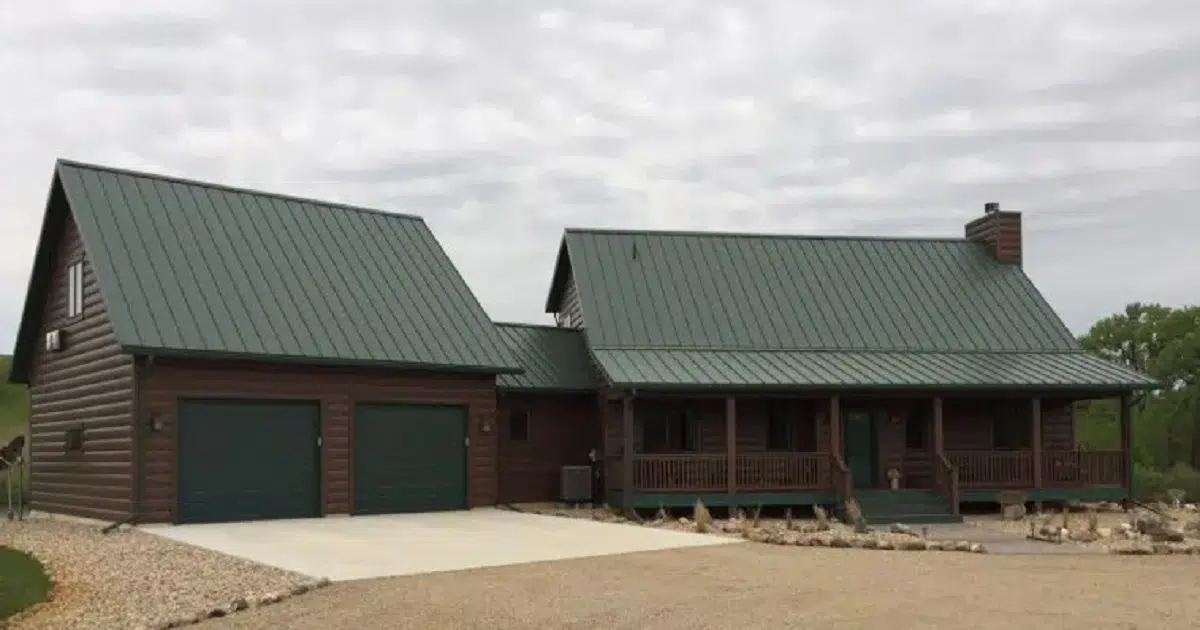
Ever find yourself driving through Texas — you know, just mile after mile of scrubby land and mesquite trees; the kind of country where the sun feels like it’s been high noon for the past week — and notice how many of these ranch houses are, well, brown? Not a few, but downright many, and we’re not talking soiled brown shades. You might be thinking, is there a local ordinance? Or a secret rancher’s code? Nope, it’s actually got more depth than you might think.
Why Brown Works in Texas
The first thing is, brown just works. If you’re familiar with Texas, you know it’s a whole palette of tan, ochres, dull yellows, you could name them all. The land looks as though it cooked in a hot oven and forgot when; when people paint their ranch houses brown, they are basically blending in to the land. It’s not exactly military camouflage. But it is making sure your house doesn’t stick out against a flat line of dirt and rock. Everything just looks like it naturally grew there; to me, it’s kind of nice. And it ends up looking pleasing, like the house belongs there instead of being dropped in from somewhere that doesn’t.
Texas Heat and the Power of Brown
But that’s just part of it. There is the weather mind you – Texas heat isn’t fooling around. People use descriptors such as “sizzling” or “hot,” but until you’re outside standing on concrete in August with your sneakers melting, you haven’t quite experienced that kind of heat. And in lieu of that, the brown paint, specifically the lighter “sandier” shades of brown, actually reflect light better than you’d think. Not reflecting like a mirror or anything, but it would reflect more than saturating all the rays black might. So it makes things a little easier in terms of inside temperature, which is wonderful when you’re trying to not go broke running the AC constantly. Also, anything that can keep your place a couple of degrees cooler matters out here. It’s not like someone’s paying city power rates.
Dust, Dirt, and Camouflage
Then we have the dust, which, well, if you’ve spent more than about fifteen minutes in rural Texas, you’ve seen the fine, tan powder that particulates and coats every single surface. When the wind picks up or simply for no reason at all, all of a sudden the air simply becomes brown. If you had a bright white house or pale blue walls you would see every single speck of dirt land. You would likely be cleaning your walls every other weekend or learning to live with streaks of grime for as long as you’re in your place. With brown, though, it’s like a camoflage of dirt. The dust basically disappears once it has landed, which makes the place look presentable – much longer, without you hauling the pressure washer out to clean. Which… Seriously, who has time for that when you’re already juggling cows and mending fences?

The Historical Roots of Brown Ranch Houses
That whole brown thing isn’t simply a practical — it’s also historically, like, old school Texas old school. Before there were highways, Buc-ee’s, and giant pickup trucks everywhere, ranching was once the local activity that had existed as far back as the Spanish colonizers who brought cattle in centuries ago. Those ranch houses were made of nearly whatever materials were available to create a ranch house: adobe bricks; rough-hewn timbers, or anything else that likely looked like the dirt they settled on already. No one is picking brown paint at the local Home Depot.
The original, actual ranch house materials were brown, so it just became almost a default norm. It happened to stay that way, the same way that barns became associated with a red color. But in this case, the brown of ranch houses was not from a formula or trend — it was because the land dictated it. And you know on how traditions go. Once everyone’s grandfather did something, it just slowly seeps into your thinking of how things should be.
The Emotional Side of Brown
There’s also an emotional aspect of brown, which people do not tend to discuss. Brown feels substantial; it feels warm, somewhat… plain. When you think of brown, you don’t think of new money or someone with something to prove to the neighbors. You think of dirt beneath your fingernails, coffee on the burner too long, the smell of saddles that need a good polishing. You think about things that are dependable. And dependable is a long way out in ranch life — or how we think of ranch life — tough, down to earth, and a little rough, but determined. So, brown isn’t simply a color we’ve chosen, it’s a sort of gentle standard: yes, we’re the people who are going to stick it out.
Beyond Brown: A Few Exceptions
That said, you can certainly see a ranch house in Texas that is blue, or white, or some shade of green that kind of matches mesquite leaves. People stray from the norm all the time, usually out of a desire to be distinctive. Or just because they could care less about being distinctive; or because they inherited a house that someone had painted beige and they just left it be. But absolutely, when you drive through the county roads, brown is still a prevailing color. There are some reasons, actually some multiple reasons, that it has remained this way. The land, the sun, the dust, and a sense of historical memory that is deep.
A Color with a Story
So the next time you find yourself cruising the backroads of Texas, you know — if you are the sort of person who likes to observe — and you notice an entire line on squat, brown ranch houses, you will understand that this is not an arbitrary choice. It includes a combination of the functional need, the history of inertia, and an older set of sensibility that is somehow contained in the color itself. And you may even think about how something as mundane as brown paint could tell the whole story about the lives that lived behind those walls, even if they are not present to tell it themselves.


