

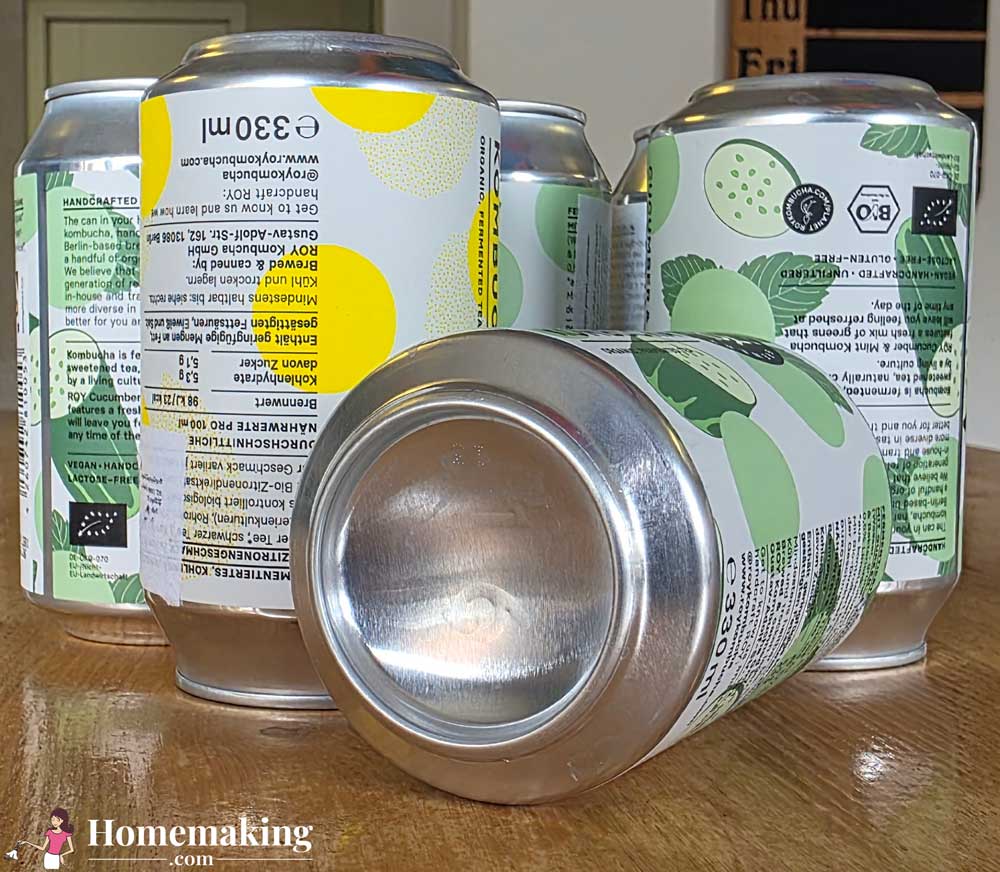
You know that moment: you put the final drop of a soda in your cup, put the empty can on the counter. For some strange reason, your mind instantly becomes aware of something that you’ve never noticed about the can in your life before. The bottom of the can isn’t flat.
Rather, it curves inward slightly, kind of like a shallow bowl.
For years, I just assumed it was purely a random design choice (or maybe to keep the can upright). However, the more I looked at the design, the more I started wondering why the designers of the cans beveled the bottom of the cans. Apparently, I am not the only one who wondered, as there is a very good explanation for why the beveling was done. It is based on the intersection of physics and engineering and a clever method of designing cans to be both light and virtually unbreakable.
Once you’re aware of it, you start to realize how clever that small design element really is.
Why Soda Cans Are Beveled
In essence, the primary reason soda cans are beveled at the bottom is due to pressure.
Soda is carbonated, so it contains dissolved CO2 in it. As soon as you seal the soda in a can, the CO2 inside creates pressure. This pressure presses outward on all surfaces of the can.
The internal pressure of a standard soda can is roughly 30-50 psi. Although that seems to be a lot of pressure, it is enough to cause potential issues. This happens when the can is subjected to outside forces if the can has not been designed properly.
If a can had a flat bottom, the flat bottom would be weaker than a can with a concave bottom when subjected to the internal pressure of the can. Under pressure, the flat bottom would potentially bulge outward or deform more than a curved bottom.

The concave bottom resolves this problem. The curved bottom distributes the pressure applied to the can evenly across the surface of the can rather than applying the pressure to one particular area. Simply stated, the curved design provides the bottom of the can with significantly more strength than a flat sheet of metal.
I sometimes refer to it as a small architectural dome. Architectural domes (and the curved shapes of many stadiums) accomplish exactly the same thing as the bottom of a soda can. They distribute the force being applied outward and allow the thin material to maintain its strength.
Another excellent example of this type of construction is eggshells. Eggshells are brittle if you hit them on the side. However, the curved shape of the eggshell allows them to be surprisingly robust to pressure coming from above.
Soda cans also work in the same basic manner.
How the Beveled Bottom Enhances the Strength of Soda Cans
Looking at the beveled bottom from a mechanical engineer’s perspective starts to make sense.
Firstly, it assists in the resistance of the can to pressure from the carbonated beverage. The constant outward pressure from the carbonation on the walls and base of the can is absorbed and distributed by the curved bottom of the can without deforming.
Secondly, it enhances the stacking strength of the can. When transporting large quantities of soda cans, they are stacked in large stacks in boxes and placed on large pallets. Then, the pallets are loaded onto delivery trucks and transported through warehouses and retail stores.
Often times, a can bears the weight of several cans stacked on top of it.
This is one of those things that people rarely think about. However, engineers who specialize in packaging design spend countless hours developing means to manufacture containers that can handle the forces produced during shipping without increasing unnecessary weight.
The beveled design contributes to the structural integrity of the can. It allows the can to handle the forces associated with stacking, shipping, and storing the cans.
Thirdly, it allows the manufacturer to use less aluminum. Today’s aluminum cans for soda are incredibly thin. In fact, most of these cans weigh only about 14-15 grams, which is incredible considering their strength.
Years ago, I studied packaging design extensively, and one of the first things I learned is that every single gram of material counts. Any decrease in metal usage equates directly to substantial cost savings for companies that produce billions of cans per year.
The curved bottom enables manufacturers to achieve the best possible balance between strength and minimal material usage.

Have Soda Cans Always Had a Beveled Bottom?
Surprisingly, the answer is no.
Historically, soda cans date back to the 1930s, when beverages began to be packaged in metal containers. Old soda cans were essentially identical to traditional tin cans for soup, were made of thick steel, and did not have a beveled bottom. As a result, old cans were substantially heavier and thicker than today’s cans.
Additionally, old cans lacked pull tabs. Rather, you used a “church key” to punch holes in the top of the can.
Aluminum cans were introduced in 1959. These cans were significantly lighter than the older cans and recyclable, which made them ideal for high-volume manufacturing.
As aluminum cans gained widespread acceptance in the 1960s and 1970s, engineers continued to refine the design of these cans. By this point, the modern concave bottom (the beveled bottom) that we see today became the standard.
It allowed manufacturers to minimize the amount of aluminum utilized in each can. At the same time, it maintained the structural integrity of the cans to withstand transportation and storage.
Therefore, the design is the culmination of decades of incremental design improvements.
Internet’s “Secondary Function” for the Beveled Bottom
Like many other common household items, the soda can has been targeted by various internet-based conspiracy theories and hacks.
One such video went viral courtesy of Jordan The Stallion, which illustrated a hack utilizing the beveled bottom of a soda can. The hack demonstrated that the curved bottom of one can could fit on top of the pull tab of another can. It could provide additional leverage in pulling the tab upward.
According to the video, the curved bottom aids in providing greater torque to help lift the second can.
I’ll admit it: the hack actually works. I even tested it myself for my own curiosity purposes, and it works, sort of.
It is important to note that the beveled bottom of a soda can was not intended to aid in opening other cans. That is simply a creative use people developed after the fact.
Regardless, it is fun to watch how the internet develops creative uses for seemingly mundane design elements.
Why This Simple Design Element Matters
The beveled bottom serves a critical function within the context of modern soda packaging.
The beveled bottom permits the can to withstand the pressure created by the carbonation within the can. It also enables the can to withstand the stacking, shipping, and storing of the cans. Lastly, it enables the manufacturer to minimize the amount of aluminum required to construct each can.
If the beveled bottom were removed from the design of soda cans, the cans would likely require a larger amount of metal to build each can. This would make them heavier and more expensive.
The small design adjustment is one of the reasons why aluminum cans are arguably the most efficient beverage container ever manufactured.
The next time you grab a cold soda from the fridge, take a look at the bottom of the can. That small curve might seem insignificant. However, it represents a clever application of engineering that continues to improve the performance of the can.
To be honest, I find details like that fascinating. People generally don’t notice the subtle design decisions that ultimately contribute to making everyday products better.
The beveled bottom is a prime example of that.


