
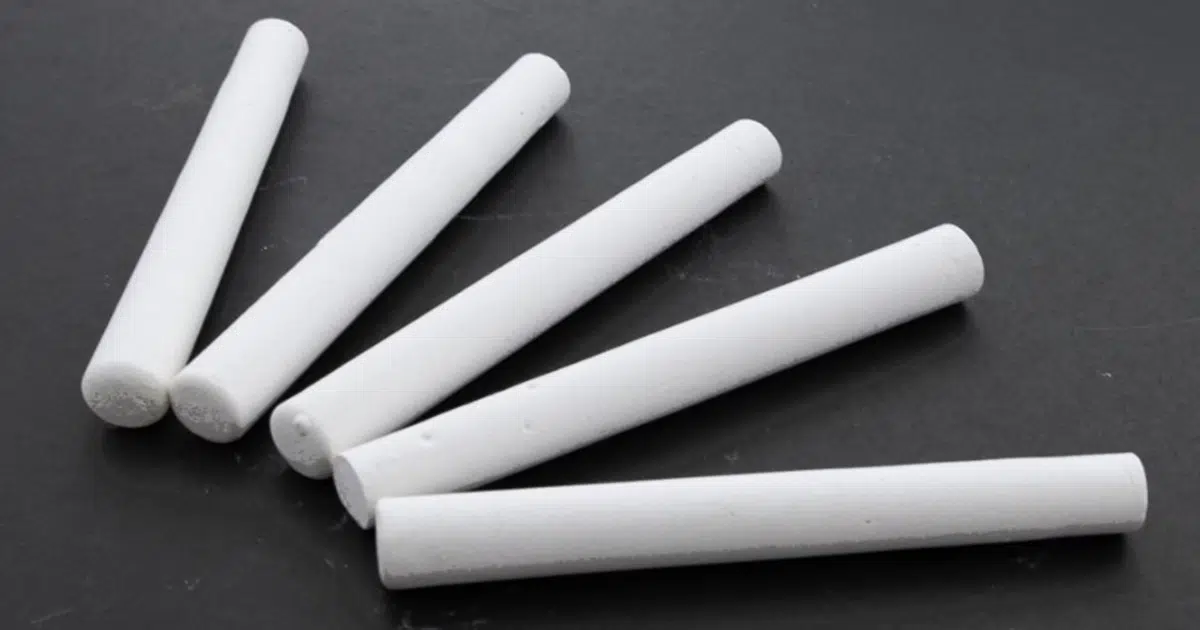
Still today I remember the very first time I saw someone use chalk outside of school. My aunt had simply left a few pieces of chalk in her kitchen drawer as if it was a regular thing. I literally laughed. Chalk in the kitchen? But it wasn’t long after that, trying to remove a lingering odor from my spice drawer, I decided to give it a shot. That’s when I found out why people tend to keep chalk in their kitchen, it’s surprisingly effective in many ways that do not feel gimmicky or exaggerated.
Since then, I’ve been experimenting with it in the smallest of everyday applications. None of which were extraordinary. Simply using it in everyday ways that could truly help. Honestly, considering how affordable and accessible chalk is, it’s rather a “no brainer.”
Why Should You Have Chalk in Your Kitchen?
Chalk is primarily made of calcium carbonate. That may seem technical, however here’s the short and sweet explanation: it’s very good at soaking up moisture.
And wherever there is moisture, typically follow smells, stains, or even spoilage. Which is where the chalk quietly goes to work.
I appreciate it because it doesn’t require chemicals or strong fragrances. Instead, it simply sits there working behind the scenes. When you keep chalk in your kitchen you’re essentially providing yourself a low-maintenance tool that helps address minor issues before they become major.

Use Chalk in Your Kitchen to Remove Odors
This is the first application I attempted and it performed much better than I thought.
I placed a couple of chalk sticks inside my spice drawer. You know that somewhat stale combined scent that develops over time? It began disappearing within several days. Not immediately, but noticeably.
I’ve also placed chalk in various cabinets and even in an empty corner of my refrigerator. It will never replace proper cleaning, obviously. However, it does help maintain freshness until you properly clean again.
My personal experience indicates that the most productive method for addressing drawer odors is by leaving a few pieces of chalk inside an open container. Believe me when I tell you you don’t want chalk dust scattered throughout your entire kitchen.
Using Chalk in Your Kitchen for Removing Grease Stains
This was the second application I discovered, and it surprised me slightly.
When you receive a new grease stain, on fabrics such as kitchen towels or even on certain surfaces, you can rub chalk onto the surface. Some of the oil is absorbed by the chalk prior to the stain setting in.
A lesson I learned the hard way was timing is everything. As stated previously, this will only work effectively on recent stains. Once the grease has set, chalk will not magically repair the damage.
Still, for the occasional mishap during cooking, it’s a great little tip. I’ve utilized it on a shirt and it did greatly diminish the stain prior to washing.
Utilize Chalk in Your Kitchen for Preserving Silverware
Kitchen silverware drawers can occasionally develop a slight amount of humidity over time due to humidity levels in your home. Moisture creates tarnishing.
By keeping chalk in your kitchen drawer near your utensils, it provides a means to absorb moisture that causes tarnishing. Reduced moisture = fewer instances of tarnishing.
Typically I’ll add two or three sticks in the bottom rear of the drawer. Zero maintenance. Zero effort. It simply quietly extends the life of the items stored.

Use Chalk in Your Kitchen for Maintaining Longer Shelf Life on Produce
While this isn’t magic, it does provide benefits in specific conditions.
When you utilize a dry space (such as a pantry or well-ventilated drawer) to store produce and place chalk in said space, it aids in reducing excessive moisture present in the air. Reducing moisture slows down spoilage for some fruits and vegetables.
Critical Note: Do NOT place chalk directly on food products. I keep chalk close by (not touching anything edible).
From what I’ve personally experimented with, I’d argue this approach performs better for non-refrigerated items. A small advantage over standard methods, not an extremely large benefit; yet sometimes that extra day of shelf-life can matter.
Apply Chalk Labels on Items in Your Kitchen
Lastly, this is the fun part!
As I began labeling various jar and container contents (especially since I swap my arrangements more than I’d prefer), I started applying chalk labels to these items.
Flour, sugar, numerous types of grains…and countless other miscellaneous items I rearrange too frequently for my liking.
With either chalkboard labels or small surfaces on which to apply labels, writing, erasing and rewriting are incredibly convenient. With chalk-based labels there is NO sticky residue and NO removing old labels.
For example, last week I applied chalk labels to multiple spice jars prior to hosting a dinner party and erased them upon completing dinner service. So simple and strangely enjoyable.
Safety Precautions for Using Chalk Effectively
Plain white chalk is all I ever use and I believe it is important to note this as well.
Colored chalk contains additives that are potentially hazardous and generally produces greater amounts of dust than white chalk.
Dry out your chalk! Dampen your chalk and you will likely create more chaos than beneficial results.
Never place chalk near or directly above any type of food product.
I normally store my chalk in tiny breathable containers or simply place it into a small corner where it cannot easily be disturbed.

Should You Keep Chalk in Your Kitchen?
Truthfully, yes, but with reasonable expectations.
It is no panacea for every problem. Cleaning and proper organization will always take precedence over this method. But for small, low-maintenance habits that promote positive changes, this is certainly a viable option.
If you keep chalk in your kitchen you get a single inexpensive method for controlling moisture, minimizing odors and grease stains through the absorption process without requiring additional expense.
Here’s how I view it:
Absorb Odors
Remove Grease Stains
Reduce Moisture
That’s it. No complex thinking required.
Considering it costs nearly nothing, I would say that is a good ROI.


