

So the other day, I got back from walking the dog—Tyler, who’s lovely but very naughty—and I kick off my shoes, as one does. And immediately I notice it. This orangey, rusty smear all over the soles. Like I’d stepped in a weird chalk or, I don’t know, low-budget paint. What would you think in my place?
Naturally, I assume I’ve stepped in something gross. But then I see it: Tyler’s paws are leaving these faint orange prints across the kitchen tile. And now it’s not just a stain issue, it’s a mild horror movie. My first thought was, like, “Is this… toxic?” because of course that’s where my brain goes.
So I look outside, and the lawn’s… off. Not dead. Just… weirdly orange in certain spots. Like someone tried to dye the grass with turmeric. It’s patchy, dull, kinda dusty-looking. Not ideal. Definitely not what grass is supposed to look like in August.
Anyway, after a lot of spiraling and a deep dive on Reddit, I found it: lawn rust. That’s what it’s called. Not a metaphor. Not cute. A fungus, actually.

So… Lawn Rust? That’s Real?
Yep. It sounds fake. I wish it were fake. But no—lawn rust is an actual thing. It’s a type of fungal disease that goes after grass, mostly cool-season grasses like Kentucky bluegrass, tall fescue, and ryegrass. Which, of course, I have, because I let the HOA pick the seed mix years ago and never thought twice.
You’ll know it’s rust because it leaves behind this yellowish-orange powder. That stuff? That’s the spores. And they get on everything. Shoes. Dogs. Mowers. Probably your soul, if you stare at it too long. It rubs off like chalk dust and clings like glitter.
It usually shows up in late summer or early fall, right when your grass is kind of slowing down. You know, not dying, but definitely past its springtime flex. Add some humidity and shade, and boom—perfect conditions for rust to roll in and start colonizing your yard.

Okay, But How Do You Get Rid of It?
Surprisingly, it’s not a full crisis, like my husband thought immediately.. Like, don’t burn the lawn down. You can fix this. Here’s the rundown of what I found and what I’ve tried:
1. Give Your Lawn Some Nitrogen
Apparently, rust loves underfed grass. Especially when nitrogen levels are low. If your lawn’s been on the “maybe I’ll fertilize it next week” schedule for months, this is your sign. A nitrogen-rich fertilizer helps the grass grow faster and stronger, basically outpacing the fungus. I did one of those slow-release feeds in early fall and saw a big improvement in like… two weeks.
2. Mow It Like You Mean It
Regular mowing keeps the rust from spreading. But don’t mulch the clippings—bag them. The spores live in those clippings, and if you leave them on the lawn, you’re just giving the rust a free ride. Also: rinse your mower blades afterward. Otherwise, you’ll be spreading it every time you mow. I learned that the hard way. RIP backyard.
3. Water Smarter
Rust loves a damp lawn, but not in the good way. So water early in the morning, not at night when everything just sits and stews in darkness. And do it deeply—but less often. You want the roots to grow down, not the fungus to thrive up top. I started setting a reminder for 6:30 a.m. watering, which felt absurdly adult, but here we are.
4. Let It Breathe—Aerate
If your soil is compacted (and unless you’ve aerated recently, it probably is), that traps moisture and restricts airflow. Rust loves that. Aerating your lawn helps it breathe, drains water better, and lets nutrients sink in. It’s like lawn therapy. It also means your grass isn’t constantly stressed and weak, which makes it less likely to get fungal takeovers.
5. Try Rust-Resistant Grass Varieties
If you keep dealing with this year after year, maybe it’s time to rip up the drama and start fresh. Some grass types—certain fescues and bluegrasses—are more rust-resistant than others. It’s not a guarantee, but it stacks the odds in your favor. I haven’t gone this far yet, but I’ve got a folder full of seed recommendations, so… give it time.

So, Do I Panic or Just Deal?
It’s not the end of the world. It’s annoying. Mostly cosmetic. And yeah, you’ll track orange into the house for a while unless you take your shoes off at the door (which, let’s be honest, you should probably be doing anyway—have you seen what’s on sidewalks?).
But if you give your lawn a little love—just like, some food, some air, some smart watering—it bounces back. The rust fades. The orange goes away. And you’re back to your regularly scheduled lawn, without the weird shoe stains.
So yeah. If you discover one day that your soles have turned rust-hued, or that your dog is making pumpkin footprints on your tile, do not be alarmed that you have stepped in radioactive waste. It’s just lawn rust. It’s disgusting, but it can be beaten.
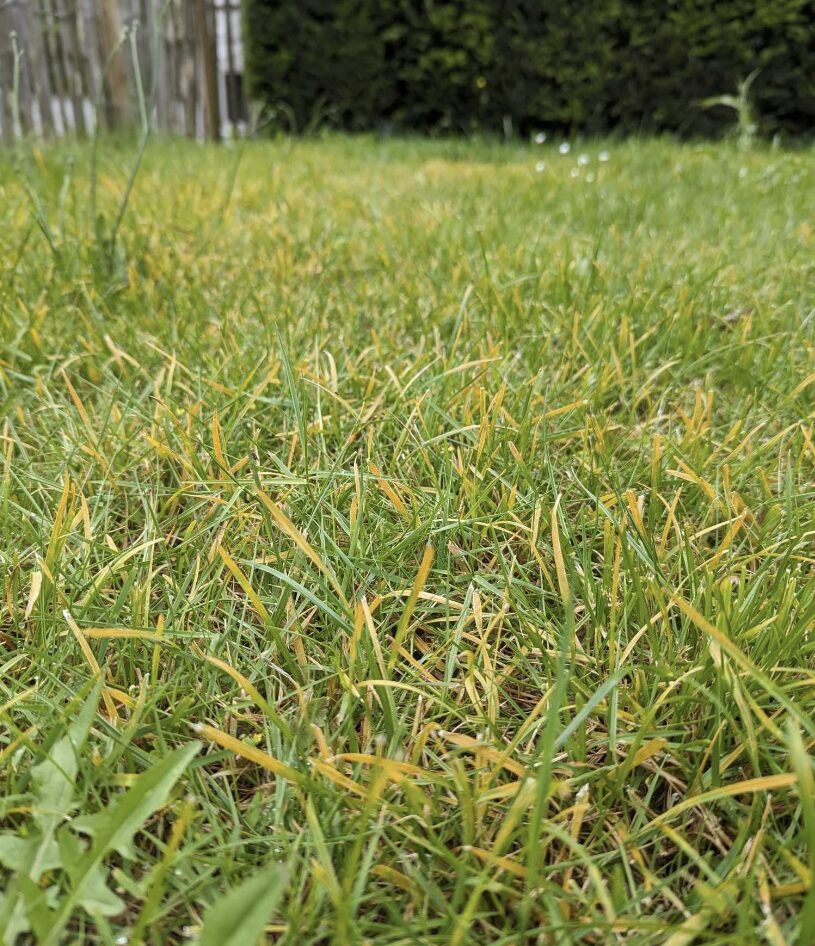
Treat the grass. Wash the shoes. Maybe wipe the dog. And, for that matter, watch out for your lawn come late summer. If it starts to resemble a dusty-orange color, rather than green, you’ll know exactly what’s up and what needs to be done.
Now if only someone had a hack to clean out the inside of my car, which is currently 20% dog, 80% grass clippings! But then again, that’s an issue for another day.


