Well, years ago – and I mean those years that just seem like, “I’m just going to just shove this here for now” years – I kept bleach and vinegar side by side under my kitchen sink, and it didn’t even faze me. Then I came across some article – maybe a reddit thread? or maybe it was a label? – about how bleach and vinegar combine to form chlorine gas, and I just stopped dead in my tracks and thought… wait, what?! There are many products not to store together, and I can’t think of what else is having negligent little chemistries in my house while I’m upstairs watching reruns.
So, I started digging a little deeper, and, oh hey, turns out, a lot of items in your house shouldn’t be stored next to each other. Not because they are going to explode right away (sometimes maybe…), but fumes, reactions, crossover – things that you might not really think too much of until you are trying to figure out why your spuds are melting, or why your dehumidifier just fried your speakers.

Anyway, here’s what I have concluded, in no particular order.
Household Chemicals: Some REALLY Don’t Like Each Other
So obviously bleach and vinegar are a no-no. What about bleach and ammonia? This combination makes chloramine vapors which are invisible lung poison. I didn’t even know about this until long after being negligent, but apparently it is especially true with acids and bases, like vinegar (acid) and baking soda (base) – fun for volcanos in science class, not so much for pantry mates.
Also, read the labels. I was, for a long time, the person who would just toss, half used, bottles under the sink without ever looking at them. But they tell you how and where to store the item, which is important info. And maybe just… tape a small “DO NOT MIX” list somewhere in your cupboard? Almost like a strange chemical buddy system.
Flammables & Oxidizers = No Thank You
So now we’re into the black-and-white zone. You have your flammable stuff – paint thinner, acetone, gasoline (if you’re storing that at home??), and you have oxidizers, bleach, hydrogen peroxide. All of these items, while I would argue they’re more analogous to enemies in a cartoon fighting style rather than flammables, are going to cause some level of fire risk if there’s a leak and/or fumes. It’s a fire risk, which matters a lot. Like, for real.
Do not store these items together. Ever. If you are serious about using these things and want to maintain an acceptable level of safety at home, use a separate cabinet. Better to be fire-rated, and not locate it right next to your oven or furnace. But hell ain’t no place for an ethylene leak and heat; just imagine turning your cleaning cabinet into a flamer – I reckon that image should do it.
Fruits vs. Fruits; The Ethylene War
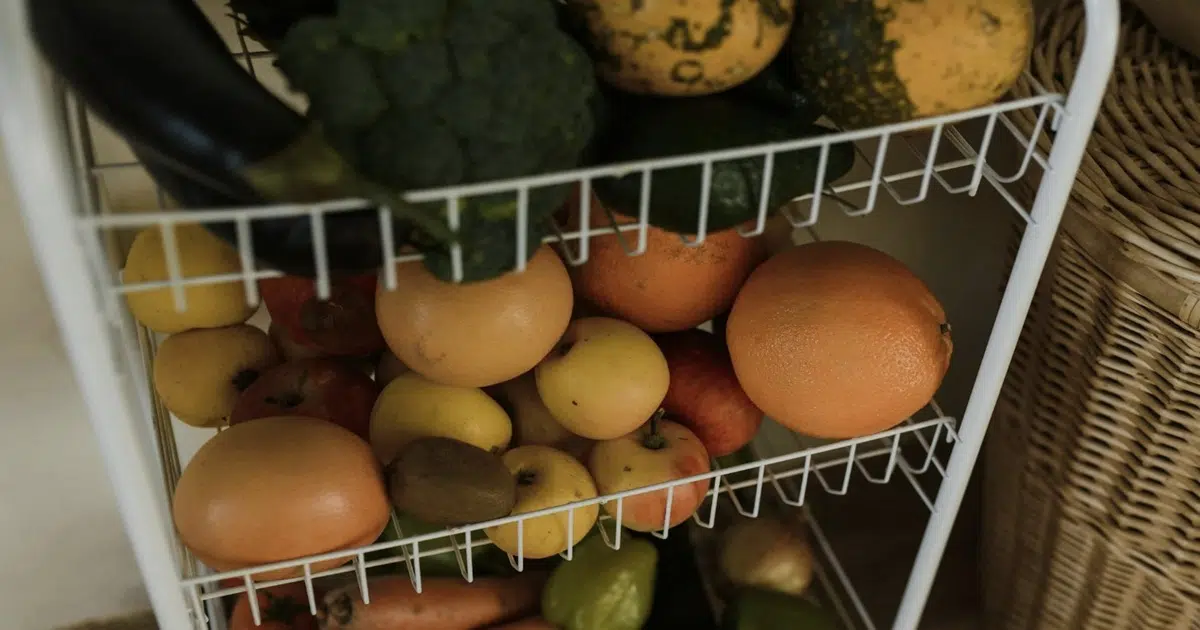
Fruits and vegetables can be extra special too. Some fruits and vegetables throw off extra ethylene gas as the fruit or vegetable ripens – bananas, apples, avocados and tomatoes are just a few. Ethylene gas hastens the ripening process, which is good as long as it doesn’t make the extreme leap from gassed-up-immediate-ripening to gassed-up mushy-weird stuff already.
There are fruits and vegetables which experience the opposite of gas non-advertential space transaction. Let’s think of lettuce, carrots, and broccoli – all of which can wilt, rot, and/or become slimy, where they appear to suffer an odious melancholic non-standard level of decomposition process. So do your best to separate the producers and the gas-haters, if it is possible. This is akin to separating middle-school cafeteria lunch tables for produce.

Onions and Potatoes; Frenemies of the pantry
I thought onions and potatoes were meant to be pantry roommates in which one can never be left without the other. Apparently, according to the literature (actual experts), that is not the case. Onions release gasses and moisture which hasten sprouting for potatoes, and potatoes add enough moisture to ruin an onion from the inner-most part of the onion! It’s the sort of deadpan passive-aggressiveness you can only pull off when you really don’t want to store food properly.
You can hide it from your guests, sure, but in various obscure places—not one shady place. Don’t smother them. No plastic bags. Allow airflow—treat your food like it needs a moment of zen too.
Raw Meat Lives on The Bottom Shelf. Always
If it is raw meat, it only ever goes on the bottom shelf. Lastly, if something drips, and it will, it will drip, it’s better it doesn’t rain down on your strawberries. Even if meat is sealed, you have a chance relentlessly against cross-contamination. It’s stealthy like that.
Store raw meat in containers with lids, separated—don’t pretend that it’s “just overnight.” It’s not.
The Cleaning Supplies & Food Never Mix
This is a biggie that people passerby Mess Up…I did too CrushingIt for a long time…storing cleaning supplies under the kitchen sink…with food. Food being anything extra cans or backup boxes of cereal. Unfortunately, that cleaning residue could leak and some of those sprays and soaps may carry vapors that affect food through sealed packaging.
Cleaning supplies, a/k/a not food, get their own zone. Food lives nowhere near it; heck, don’t even “just until I can figure out what to do with it.”

Electronics & Damp Things? No.
Ever stored your Bluetooth speaker a few feet away from your pack of bottled water? Ever stored a dehumidifier a few feet away from the charger for your laptop? Me too! Water & electronics don’t have a good deal.
Store the electronics in a zone that is dry and away from excessive temperature. Completely dry fabric, without any stacked items. And sure as HECK don’t place something next to electronics because “eh, it’s fine,” because IT NOT FINE.
Your Bathroom Cabinet is Ruining Your Meds
I don’t know who made the decision only to keep meds in the bathroom cabinet, but steam is ruining everything! Moisture and humidity will disintegrate pills, erode coatings, and reduce shelf life–even more so for anything sensitive like antibiotics or hormone therapies.
Keep pills in a drawer or cupboard that isn’t near a stove or sink. This will be the best place for coolness, and also away from the heat and humidity. Just keep them in the original container, no inventing a version of ‘whose mystery pill bottle is this?’ if you can’t keep track of it anymore.
Don’t Date Metal with Batteries
This one freaked me out. Putting batteries in a junk drawer with paperclips and coins? Yep, short-circuit, overheating, even real fires.
Leave batteries in original packages, or in a storage case. With none of their metal friends. And please, make sure they are stored away from children and animals, because…. that’s enough said.
No, you can’t put yogurt in the fridge in the garage.
People will try to store perishables in places that just do not have stable temps–like a beer fridge in the garage, which is just an extravagant cooler. Not good for meat, dairy, and any kind of perishable that needs consistent cold. If the temp fluctuation changes, your food can be a breeding ground.
Food that is for long term storage? Only shelf stable things like canned goods, rice, dry pack foods. That is it. Everything else can go in a fridge, that is for real refrigeration.
Aerosols Hate Heat. And Cars.
Spray cans, deodorants, hair spray, cooking spray–they are all cans under pressure. And heat makes them dangerous. Leaving a can in a hot car? That’s how you can dine ‘a la explosion.’ Same thing with sunlight, or anything on a cabinet at the end of your kitchen counter next to the stove. The best-case scenario is a cool, dark area with no heat sources nearby. If you are still stumped, call your local fire department. Seriously, they’d rather give you a little advice than end up cleaning up the mess.

Sunlight Ruins Cosmetics, Too
Makeup, especially natural or SPF-included products, do not like heat or light and routinely separate and degrade or just stop working. That cute little tray sitting on your windowsill? Wrecking your regimen.
Just put makeup in a drawer or cabinet. Some shaded area. It’ll last longer, and you won’t be rubbing expired goo onto your face and wondering why your SPF foundation suddenly smells like dressing or why your blush looks like it has lumps in it.
Tools and Fertilizer = Weirdly Risky
So I used to hang my garden gloves right next to a bag of fertilizer, so do not get me started. No one told me it was even an issue, and when I found out, I was aghast. Fertilizer can be corrosive – or flammable – or both and if it travels onto your tools you are in for rust or some sort of chemical reaction—just one more danger waiting to happen.
So just put them in separate bins. Tools in one bin, fertilizers sealed and in another bin elsewhere, easy. They are not hard to separate in your garage, you just have to give it a second thought and be more conscious.
Pet Food is NOT Garage-Proof
Pet food ends up in garages or utility rooms, almost always. And it routinely sits right next to things like detergent and bug sprays. No matter how securely sealed a bag of pet food is, it will absorb odors. Or fumes. No bueno for your pet’s health or appetite.
Airtight containers for pet food help. But a better solution is to store pet food in a different area (like a pantry or closet) far away from chemicals, preferably a clean area.
Paper and Moisture = Garbage
And finally. Paper products located near water heater or under a sink? Dumb. Paper materials are a sponge for moisture, will rot, and they mold if not really old or sharply folded or crumpled. And that has never happened, and it happens a lot faster than you think.
So when you stow those bulk packs of paper towels or toilet paper, do so at least within reach of the ground or up top and dry, and dry, ventilated space. Dry can even be a cheap wire rack stowed high as opposed to anywhere near a pipe.
Listen, I know all this sounds like a huge undertaking and undoubtedly, you are not going to go home and organize your entire house today. But the first time you start noticing odd couples next to each other and neighboring one another – bleach next to food, meat above noodles or bagged vegetables, bananas with carrots – is when you cannot unsee it.

Just think of a couple of things to fix. You deserve to create a little structure within the chaos. You certainly do not have to become Marie Kondo or an expert in hazardous waste, just…it should be a reasonable goal to not let your onions overtake your potatoes. Or have an exploding form of your deodorant in your car. Small victories.
It is not about getting it perfect. Just get more conscientious about it.