
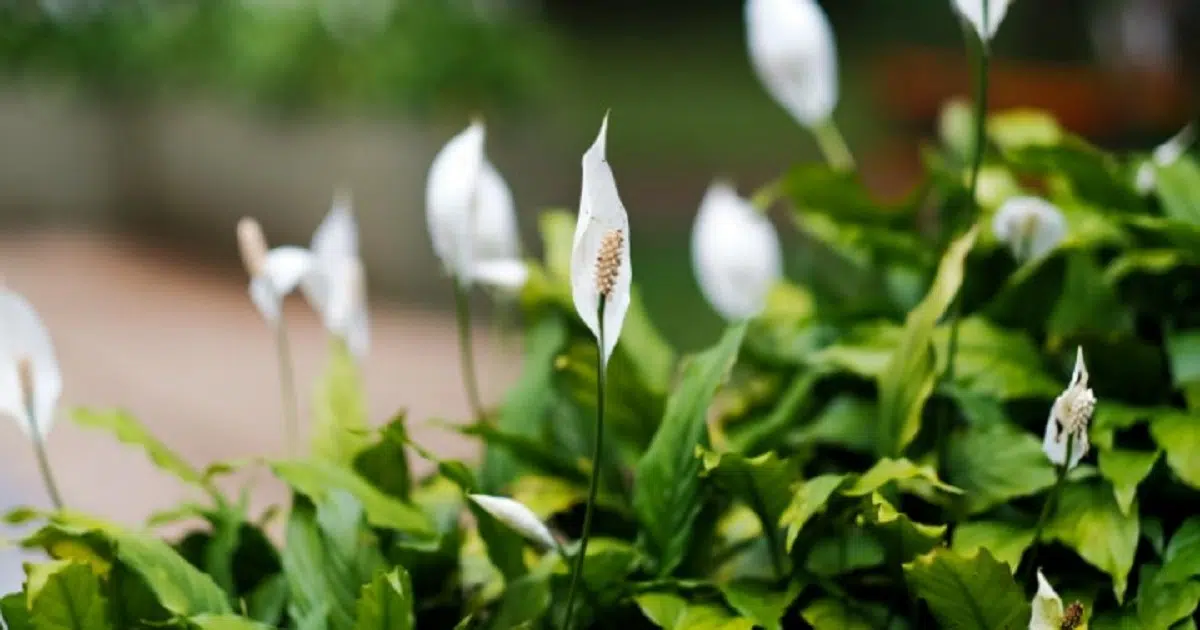
Peace lilies (Spathiphyllum spp.) are famous for their beautiful green leaves and lovely white flowers. Because of this, they are very popular among houseplant lovers. In fact, peace lilies are an easy houseplant to care for; however, they do sometimes become a bit tricky to get to flower regularly. Mine rarely flowers, but when it does, I feel I have accomplished something! I feel like the plant is telling me, “You’re doing alright, you are not killing us.” I am always on the lookout for some even better tips for care. In this article, I will provide some tricks and tips to getting your peace lily to produce more flowers, as well as some care and maintenance recommendations to help the overall plant health so you can benefit from all the beauty of flowers from your peace lily!
Light Them Up:
Peace lilies thrive in bright, indirect light. The best location for your peace lily is next to a north-facing window or in a spot that receives filtered light through a sheer curtain. When watering, it is important not to let them sit in saturated water, so be sure the pot has drainage holes in it so excess water can escape. Peace lilies love light, and this is important for flowering, so be sure they are getting enough light!

Temperature and Humidity:
Peace lilies grow best at temperatures between 65°F and 80°F (18°C to 27°C). When determining a location for your peace lily, avoid placing it in an area known for drafty conditions or near heating or air conditioning vents. The best combination of temperature and humidity encourages optimum blooming potential, and tropical plants can be adversely affected by temperature fluctuations. To be specific, high humidity levels and misting or the use of a humidifier can also stimulate flower production.
Watering:
Water quality is incredibly important for your plant’s health and blooming. Peace lilies prefer the soil to be consistently moist, but not wet! When watering, the best approach is to feel the top inch of soil. If the top inch of soil feels dry, it’s a sign the plant is in need of water! Be sure that the plant gets some good drainage, using a well-draining potting mix, and your pot should always have a drainage hole! If you water too much, the plant’s roots may begin to rot and will not produce flowers!
Evenly Moist Soil:
Peace lilies like the soil to be moist, but not standing in water! Allow the top inch of soil to dry out between waterings, but do not allow it to completely wilt! The level of consistency in your watering will be important for keeping your peace lily beautiful and blooming!

Fertilize:
If you want to produce more flowers, use a balanced, water-soluble fertilizer once a month during the spring and summer, which is its growing season. Dilute the fertilizer in water and never apply too much, as it can burn your peace lily. Follow the dosage instructions on the fertilizer packaging. The ideal balance of nutrients for blooming is provided with a technical manner of fertilizing, and will help in creating a healthy plant.
Pruning and Division:
Pruning will help initiate growth and can create more flowers. Take off any yellowing and/or brown leaves, and always remove spent flowers right away if possible. Pruning will always help with blooming! A few years after transplanting, the peace lily will enjoy division, or simply separating the plant. Gently remove the peace lily from the pot, separate a few root clumps, and replant each clump in fresh soil. Division of the root clumps has the possibility of awakening the plant and leading to flowers.
Reduce Stress Factors:
Peace lilies do not like stress! Any exposure to cold drafts, extreme temperature shifts, or sudden changes in their light requirements is stressful to the peace lily. Keep it away from ethylene-producing fruits like bananas, apples, etc.

Keep a Clean Environment:
Your peace lily might not bloom because it cannot photosynthesize due to dust and dirt on its leaves. Wipe down the leaves, carefully, with a damp cloth on occasion.
In conclusion, cultivating your peace lily to send out more flowers requires your attention to its need for care in an environmental sense. Adequate light, ideal temperature and humidity, well-draining watering, some nutrients through fertilizing, some manipulation of the plant through pruning and division, and attention to the environmental stressors and cleanliness of the environment all offer your peace lily the best chance for success! With just a bit of care, your peace lily will reward you with beautiful peace lily flowers that add beauty and tranquility to your indoor space.


