
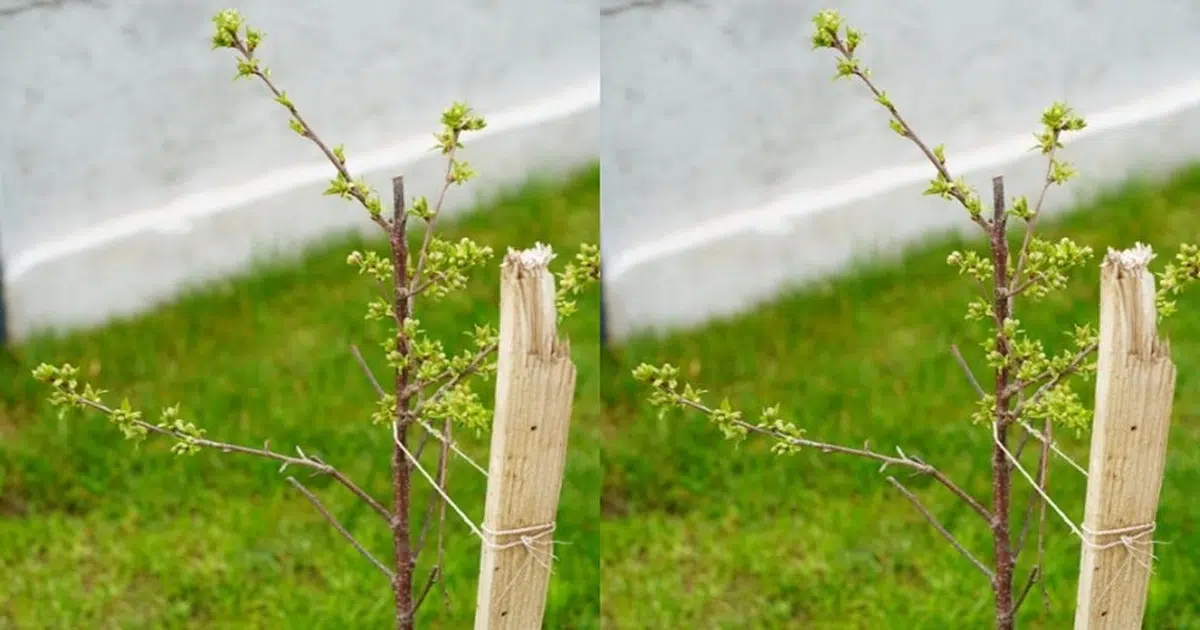
I used to believe that tree stakes were simply a product that came along with planting a tree, sort of like training wheels for trees. But what I have found out is that is not the purpose of using tree stakes. Understanding when to remove the support from a tree can be very important for some homeowners. Too much support can hinder the natural development of a healthy tree.
Tree staking is generally only temporary. Often, less support is beneficial to the overall strength of the tree over time.
Why do we stake young trees?
Young trees tend to have either small or unstable root systems in comparison to the size of the plant material (canopy) above ground. Transplanting trees disrupts the connection of the roots to the soil. Roots must then spread and stabilize themselves before the tree can begin to establish itself naturally. Wind and loose soils can displace the root system. Therefore, wind and loose soils can slow the establishment of a new tree.
Supporting young trees through staking provides an opportunity for roots to stabilize themselves. Stakes can limit extreme leaning, help keep young trees rooted, and provide additional protection for young trees in windy locations.
In my experience, the greatest challenge to properly supporting young trees comes from assuming that all newly planted trees need staking. Not every tree needs to be staked.
If you’ve just staked a few young trees, you might also find yourself wondering whether cicadas will harm your garden once the swarms show up.
Are all trees suitable for staking?
Not all trees will benefit from being staked. Many types of trees actually grow better without any type of support.
Transplanted trees that are larger than usual or top-heavy may need temporary support. Trees placed in extremely windy areas or those planted in loose or sandy soils may also benefit from being staked during the initial year of establishment.

Smaller trees with a well-balanced canopy typically establish themselves faster when left alone. A slight amount of wobble is not harmful to establishing a healthy root system. In fact, allowing trees to move naturally contributes to developing strength within a tree.
Overstaking a tree can create weak trunks. Young trees that remain stiff for too long may struggle when supports are removed. This is similar to overprotecting a child learning to ride a bike. Eventually, children need to learn to ride on their own.
Movement allows trees to develop strength
Trees respond remarkably well to movement caused by wind. When a trunk begins to sway due to wind, the tree responds by developing increased structural integrity. As the trunk develops greater thickness, roots extend further down into the earth.
Natural movement is essential for the long-term structural stability of a mature tree. Without this movement, a young tree will likely remain slender. It will also remain reliant upon artificial support for an extended period of time.
Flexible ties allow limited movement
Proper tree staking will allow for limited movement of a young tree instead of locking a young trunk completely rigid. Typically, flexible ties that are secured lower on the trunk prove more effective than restrictive ties secured higher on the trunk.
Trust me when I say you want to pay attention to this particular detail. I have personally observed young trees that were strapped so tightly they had almost no movement whatsoever. Months later, the trunks were still quite slender and appeared stressed.
Common errors with staking young trees
There are numerous mistakes made when staking young trees, even with good intentions. Homeowners want to protect the young tree, so they over-support it.

A common error is securing straps too tightly around the trunk. Wires, ropes, or narrow bands may constrict the bark as the tree expands. As a result, this can lead to girdling, as the damage to the trunk increases over time.
Another mistake is keeping stakes on for too long. There are many examples of trees located near parking lots with old straps dug into the bark years after they were originally planted. At this stage, the damage caused by the strap is typically worse than any potential damage caused by wind before staking.
Securing straps too far up the trunk can also restrict development because the upper section of the trunk does not experience sufficient movement. Unyielding support systems can prevent a tree from developing strength where it is needed most.
From personal experimentation in my garden, I have found that optimal support for young trees usually consists of providing as little support as possible. At the same time, it involves allowing as much flexibility as possible for controlled movement.
When is it time to remove supports from a young tree?
Generally speaking, it is recommended that stakes be removed after one growing season, or approximately six to twelve months after planting. However, this general guideline varies based on local environmental factors such as wind, soil quality and type, and tree variety.
Instead of relying solely on the calendar, it is helpful to check for signs that the young tree is prepared to stand independently. A healthy young tree should stand upright without excessive leaning. The trunk should feel significantly stronger than it did at planting time. New growth should also appear healthy and balanced. Slight movement at the base is typical, but excessive root displacement may indicate that additional time is needed before removing support.
While some trees require longer periods of support in windy or harsh environments, support systems should never be treated as permanent structures. Gradual independence is the goal, not lifetime reinforcement.

If you are unsure whether it is safe to remove the supports from your young tree or trees, perform a simple experiment. Temporarily remove the ties and observe how the trees behave for three consecutive days under calm weather conditions. If your young trees continue to demonstrate stability, they are likely ready for support removal.
Safe removal of support straps and ties
Removal of support straps and ties is generally easy, but caution should be exercised when doing so. Carefully cut any straps or ties you plan to remove to avoid causing injury to the existing bark. Additionally, when removing stakes and straps or ties, be careful not to disturb nearby roots.
After removing stakes, straps, and ties, monitor your young trees for several weeks to ensure they remain stable under average wind conditions.
Garden stakes for tall flowers and vegetables face a different challenge altogether: staying visible enough that nobody snaps them in half while weeding or harvesting.
If severe leaning appears after removal of supports, it may be necessary to reassess your method of support and possibly adjust it rather than re-staking your young tree.


