
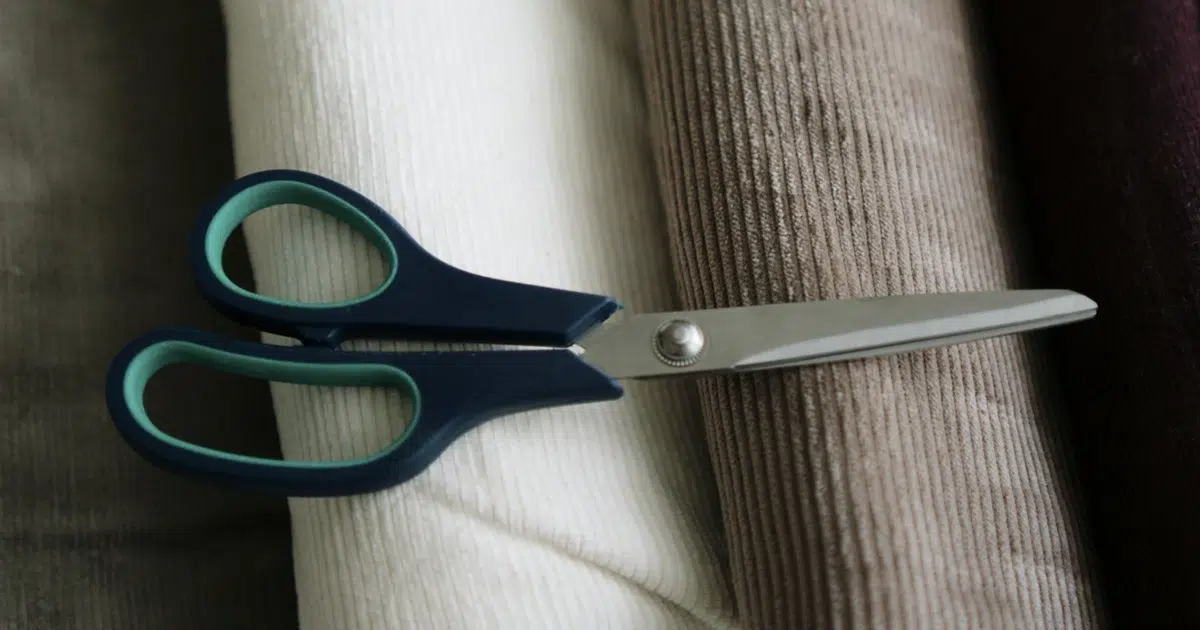
I was skeptical, when I saw the video that demonstrated a “Hack” to sharpen scissors at home by stabbing them into a bowl of sugar. I paused scrolling. Someone was stabbing their scissors into a bowl of sugar like the scissors owed them money. It looked a bit odd… and a bit silly. But I was curious, could something as simple as sugar possibly revive dull blades? I’ve had to deal with a bunch of blunt scissors in my time (more than I’d like to admit), so I decided to give it a shot and figure out what’s really going on here!
The basic idea behind the Hack
The idea is fairly simple. Take some dull scissors, and continue to stab them into granulated sugar until somehow magically those dull blades will become sharp again. This type of Hack fits into the same category as many other “quick and dirty” hacks, such as using aluminum foil or sandpaper to sharpen scissors. People use the argument of abrasion to explain how these methods work. Abrasion implies that some sort of abrasive surface will wear down the dull blade enough to create an edge. At first glance, it seems somewhat logical, especially if you’re looking for an easy solution and don’t want to spend money on the proper tools to sharpen scissors, or even know how to sharpen scissors.
Some home cooks swear toothpaste can sharpen a dull kitchen knife, which makes me wonder if it holds up any better than the sugar trick.
I tried this hack
So I took one of my older pairs of kitchen scissors that were clearly long past their prime. They couldn’t even cut paper cleanly; they ate through plastic instead of cutting through it. Great candidate for testing. I poured some standard white sugar into a bowl, and began snipping at the sugar just like the videos said.
To start with, it sounded and felt… crunchy. That’s the most descriptive word I can come up with. There was friction, a gritty sound. It almost seemed like the blades were doing something good. After about a minute, I cleaned off the scissors and tested them again on paper.
Honestly? I thought they felt a little better. Slightly, but not drastically. Smoother. The cutting action didn’t seem as jerky. However, when I really listened carefully, I realized the difference was minuscule, if it was any different at all. Large items still gave me problems, and they certainly weren’t “new.”
But I noticed that after cutting sugar, the blades appeared to be cleaner. No dirt accumulated on the blades. Perhaps this influenced how they felt afterwards.

Does “cutting” sugar really sharpen scissors?
Now we enter into science territory. The best way for me to approach questions like this is to analyze the materials used. Sugar may feel gritty, but it is relatively soft when comparing it to steel. Steel blades in scissors are designed to maintain a razor-sharp edge. To sharpen steel blades effectively, you’ll require a surface harder than the steel itself, typically a stone or a special abrasive.
In essence, sugar is simply too soft to shape or hone the edges of the blades.
So, if you’re asking yourself, “does cutting sugar sharpen scissors?” technically speaking: no.
It does, however, provide some degree of cleansing of the blades. If you have debris stuck to your scissors (such as glue, food, etc.), cutting into sugar may remove some of the residue. Cleaner blades usually operate more smoothly, providing a false sense of improved sharpness.
As opposed to something like sandpaper or a sharpening stone, which truly grind down and reform the metal edge, that’s true sharpening. Sugar just lacks that capability.
Why this Hack appears to work
There’s a blend of psychological elements and minor physical factors contributing to this. Expectation bias is one. When you try a Hack anticipating improvement, your mind tends to fill in the blanks. I definitely fell victim to that.
Additionally, the cleaning factor that I mentioned above is also at play. Cleaning away debris can make your scissors glide better, regardless of whether the actual edge has changed.
Lastly, there’s a small possibility that there will be slight temporary realignment of the edge; however, this would be marginal at best.
Remember: something that feels sharper is not necessarily sharper.
Better methods for sharpening scissors
If you wish to sharpen scissors at home, there are much better ways to go about it. I have attempted several methods myself and some are certainly worthwhile.
Using a scissor sharpener is likely the simplest path forward. Just place the blades inside and pull them through a few times, done! While it may not repair severely damaged scissors, it will generally suffice for minor dullness.
Sharpening stones are more hands-on and far superior for effectiveness purposes. A major lesson I learned the hard way regarding sharpening is that angle makes a huge difference. If you manage to align the stone correctly, you’ll see significant improvements over anything considered a Hack.

Another DIY method of sharpening scissors is cutting sandpaper. Although not nearly as accurate as using a stone, sandpaper has enough grit to produce noticeable improvements. However, I would consider this only as a short-term fix.
And lastly, there is professional sharpening. If your scissors are high-quality or extremely dulled, this is probably your best bet. While it will cost you some money, you’ll be seeing results unlike anything else.
So does it work?
Will sugar sharpen scissors? Not really. I understand why it became viral; it is simple, inexpensive, and strangely enjoyable. If you’re serious about fixing dull scissors, this is not the method to base your efforts upon.
From my own testing experiences, I believe the primary function of cutting sugar is merely a form of cleaning rather than sharpening scissors. It may cause your scissors to feel slightly smoother, but you will not achieve an optimal sharp edge. Today, I prefer using legitimate sharpening equipment or replacing my scissors altogether if they’re beyond salvaging.


