

Let’s talk about something gross but super important—dishwasher fungus. That weird smell? That strange slimy or fuzzy buildup around the filter or rubber seal? Yep, it’s mold. And yes, it can absolutely live inside your dishwasher. The irony, right? The place that’s supposed to clean your dishes ends up being one of the most common hidden mold zones in your kitchen.
And I get it. Dishwashers seem self-cleaning. Hot water, soap, steam—it should be enough to keep mold away. But the truth? It’s the perfect environment for mold and mildew to grow. Warm, damp, dark, with just enough leftover food to make it cozy.
What Does Mold in a Dishwasher Look Like?
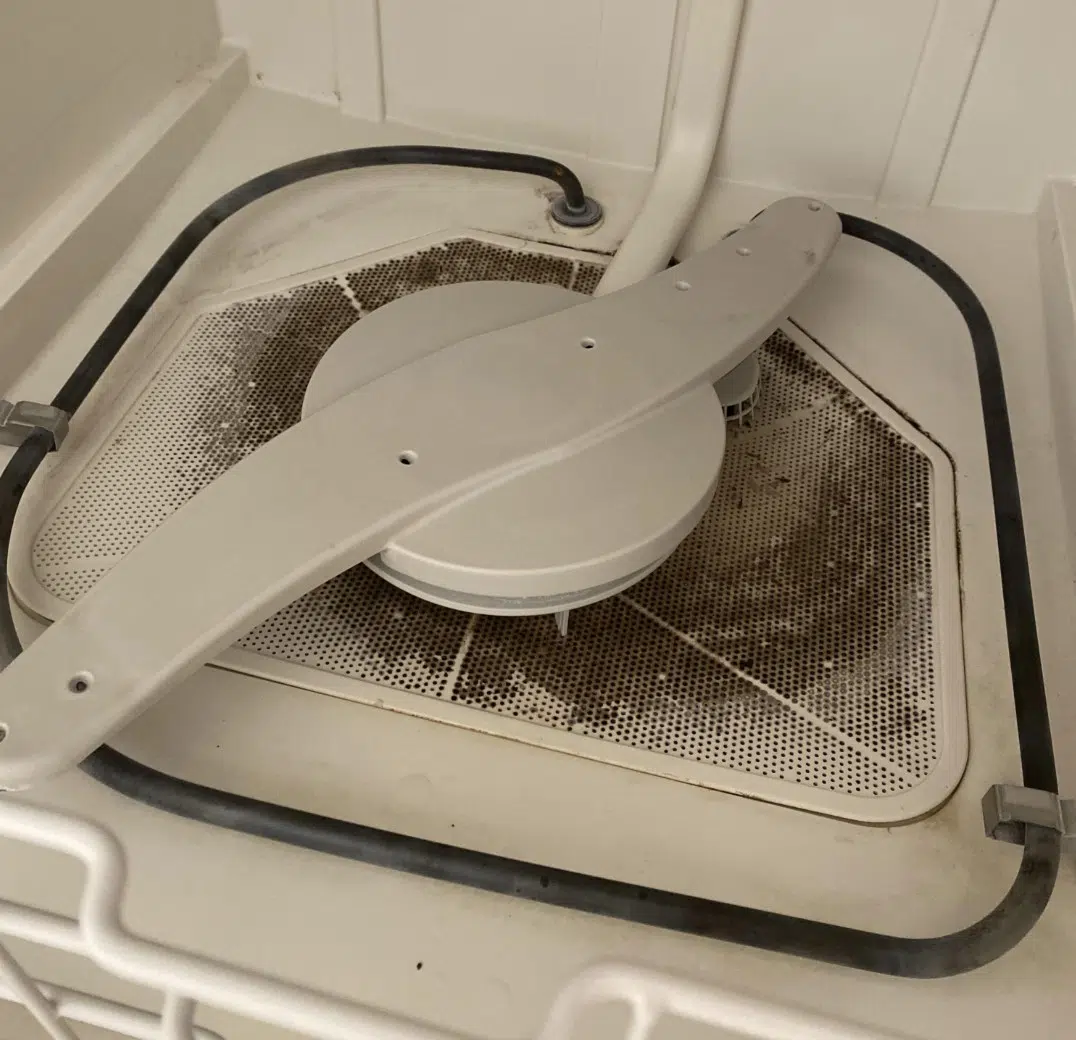
Mold can be sneaky. It’s not always the dramatic black blotches you’d expect. Sometimes it shows up as gray sludge, white fuzz, or even orange and pink film, especially in places that don’t get much direct spray—like the rubber gasket around the door or deep inside the filter.
If you’ve ever opened your dishwasher and caught a whiff of a sour or musty odor, that’s a big sign something moldy is brewing. You might notice weird buildup in the spray arms, on the inside of the door, or along the bottom tray. And the gasket—oh, the gasket—is often the most overlooked hiding spot for mold in the entire kitchen. In fact, this is the same area where people often discover black mold on the refrigerator gasket, which thrives in similar conditions.
Is It Safe to Use a Dishwasher with Mold?
Nope. Not even a little. Dishwasher mold isn’t just an aesthetic or smell problem—it can actually be a health concern. Every time you open that door, mold spores can get into the air and potentially irritate your lungs, trigger allergies, or worse if you’re immunocompromised.
On top of that, the spores and residue can stick to your supposedly clean dishes. That means you’re eating off surfaces that were essentially rinsed in a moldy environment. No, thank you.
So if you’ve noticed any signs of mold or a persistent smell that won’t go away, it’s time to clean your dishwasher from the inside out.
What Causes Dishwasher Fungus to Grow?
There are a few main reasons mold ends up in your dishwasher:
- Leftover Food and Grease: Even small bits of food trapped in the filter or drain can feed fungus. Over time, it turns into a sludge that’s perfect for mold to thrive in.
- Moisture Build-Up: Dishwashers are naturally humid. If you close the door immediately after a cycle or the dishwasher doesn’t dry completely, the lingering steam creates a haven for mold.
- Dirty or Clogged Filter: If you’ve never cleaned your dishwasher’s filter—no judgment, but that’s probably a big part of the problem. Filters collect grease and food debris, which becomes mold fuel.
- Hard Water or Soap Scum: The residue from minerals and detergent can create a sticky layer on internal surfaces that trap bacteria and mold spores.
In some cases, mold growth in appliances is just one symptom of a larger issue. If you’re dealing with frequent musty smells or health symptoms you can’t explain, it may be a sign that mold is present somewhere else in the home and your dishwasher is just one of many affected spots.

How to Clean Mold in the Dishwasher
Ready to evict that dishwasher fungus? Here’s a step-by-step method that works every time:
- Take Everything Out
Racks, utensil baskets—remove it all. You want full access to the inside. - Clean the Filter
Pull out the filter (usually on the bottom), and scrub it with dish soap and hot water. Use a toothbrush or small scrub brush for all the crevices. If it’s super grimy, soak it in white vinegar first. - Scrub the Gasket and Walls
Use a cloth soaked in vinegar or a baking soda paste to scrub down the rubber door seal and the inside of the dishwasher. These areas trap moisture and become mold breeding grounds. If you’ve ever had to remove mold and mildew from caulking, you know how stubborn these areas can be. - Clear the Spray Arms
Use a toothpick to poke out any gunk stuck in the little spray holes. Mold loves to hide in these low-flow areas. - Run a Vinegar Wash Cycle
Place a cup of white vinegar in a dishwasher-safe bowl on the top rack. Run a hot water cycle with no detergent. This helps dissolve grime and kill mold spores. - Follow with Baking Soda
Sprinkle baking soda along the bottom of the dishwasher and run a short hot cycle. This freshens the interior and helps lift stubborn mold residue. - Dry It Out
After cleaning, leave the door open to let the inside fully dry. Mold can’t grow without moisture.
Preventing Mold from Coming Back
Cleaning is just step one—prevention is where the real win happens. Here’s how to keep mold out of your dishwasher for good:
- Keep the Door Cracked Open after every cycle. It lets steam escape and prevents moisture buildup.
- Wipe the Gasket Weekly. It’s just a quick swipe but makes a huge difference.
- Clean the Filter Regularly—once a week if you use your dishwasher daily.
- Use Vinegar Once a Month as a maintenance rinse to stop grime buildup.
- Avoid Pre-Rinsing Dishes Too Much. Just scrape off big chunks. Some detergent actually works better with a bit of grime to cling to, but don’t leave full meals on the plate.
- Fix Any Drainage Issues right away. Standing water in the bottom of the dishwasher is a moldy mess waiting to happen.

Also, if you’ve noticed other trouble spots in your kitchen or bathroom, it might be time to look into whether mold and mildew are hiding in caulking or other less obvious places around your home.
Dishwasher fungus is gross, but totally fixable. And more common than you might think. All it takes is a little attention and some smart habits to keep it away for good.
If you’re seeing recurring mold issues around the house, from your dishwasher to your fridge and even bathroom corners, you’re not alone. These are areas that people often overlook, but mold doesn’t. Keeping things dry, clean, and ventilated can save you a ton of trouble—and help your appliances last longer too.
Stay one step ahead of the fungus, and your kitchen will stay fresh, safe, and mold-free.


