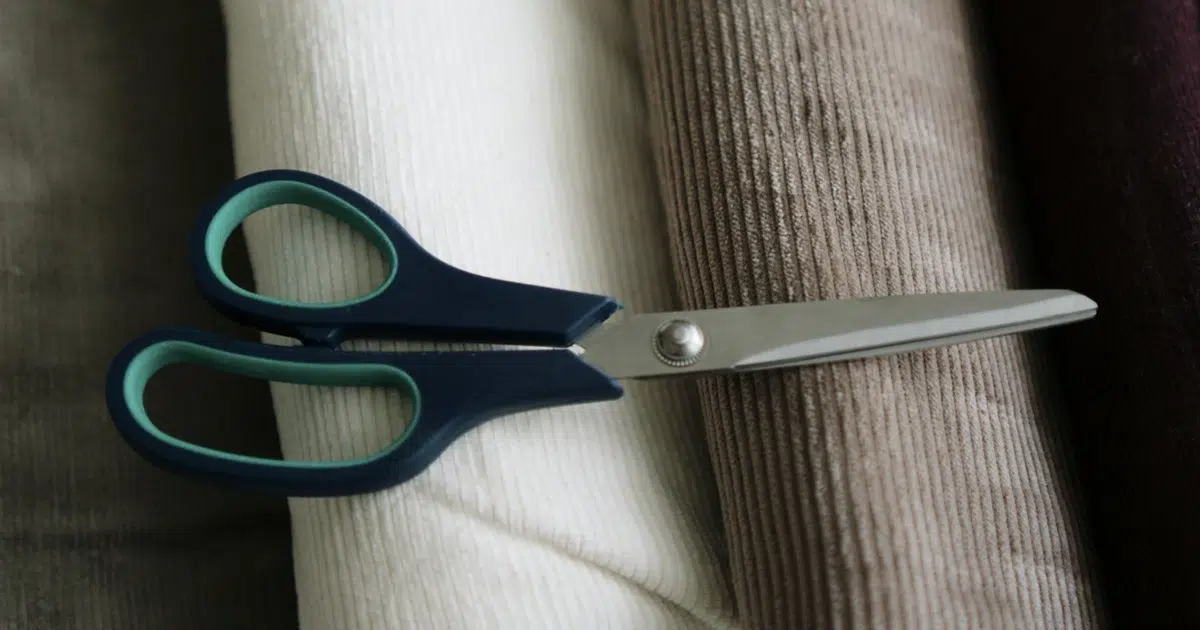
I was digging through a rental kitchen drawer looking for a bottle opener, elbow-deep in mismatched spoons, when my hand closed around a pair of scissors that felt wrong. They had a little circular opening rimmed with tiny teeth where the blades should meet. I tried them on the corner of a receipt. Nothing. They wouldn’t cut paper at all. Just a toothed ring that opened and closed like a very confused stapler.
Turns out I’m not the only one who’s stood there frowning at a drawer. A near-identical find made the rounds online a while back, pulled from a Spanish rental, same round toothed hole, same baffled owner. So here’s the plain answer: they’re quail egg scissors.
So What Are Quail Egg Scissors?
Instead of two flat blades sliding past each other, a pair of quail egg scissors has a small circular ring lined with fine teeth or a shallow blade. You rest the pointed tip of a quail egg inside that ring, then squeeze. The teeth score cleanly all the way around the shell in one motion, popping off the top like a little cap.
That’s the whole trick. The round opening isn’t decoration. It’s sized to hug the narrow end of a quail egg, which is why it looks so odd out of context and why it refuses to cut anything flat.
So it’s a single-purpose gadget, not a stand-in for proper kitchen shears. It won’t spatchcock a chicken or snip herbs. It cracks one very specific thing, and it does it well. If you’ve ever squinted at the toothed part on regular kitchen scissors and wondered what it was for, this is a distant, far more specialized cousin.
Why Quail Eggs Are So Annoying to Crack
Here’s the part that actually explains why this tool exists. Quail eggs look delicate, and the shell is genuinely thin. Tap one on the counter and it tends to crack unevenly, shattering into little speckled flakes rather than a clean split. So far, so fiddly.
But the real problem is what’s underneath. The inner membrane of a quail egg is surprisingly tough and leathery. You can break the shell and still be stuck, poking at a stubborn rubbery skin that won’t tear where you want it to. That’s when things go wrong. You end up pushing shell fragments into whatever you’re cooking, or your thumb punches through and wrecks the yolk.
The scissors sidestep all of it. Because the toothed ring scores through the shell and that leathery membrane at the same time, in one clean circle, the top lifts off intact. The egg pours out whole, yolk unbroken, no crunchy bits swimming in it. For anything where you want a soft, round little yolk sitting there looking pretty, that clean top is the difference between a nice plate and a mess.
Who Actually Owns One of These?
Mostly people who cook with quail eggs often enough that hand-cracking them one at a time has become genuinely annoying. Think tapas and small plates, garnishes, soft-cooked quail eggs served whole, or any plating where an intact yolk is the point. That squares nicely with the tool turning up in a Spanish rental, where quail eggs on small plates aren’t exotic at all.
The gadget is cheap and pretty common wherever quail eggs are a regular thing. Which is exactly why it ends up abandoned in a rental drawer, quietly confusing every visitor who reaches past it for a can opener.

Honestly, though, for someone who cracks a single quail egg maybe once a year, it’s overkill. The tip of a sharp paring knife will score the top in a pinch if you go slow and steady. You just won’t get the same tidy result, and you’ll probably murder a yolk or two learning how.
A Drawer Full of One-Trick Tools
Kitchens are full of these hyper-specific little objects that look like riddles the moment you take them out of their natural habitat. Half the fun is the flash of confusion before the coin drops.
That same puzzled-drawer feeling comes back with the round metal disc with no writing on it that some people find rattling around all by itself, and it turns out to have its own oddly specific reason for being there.
So next time a rental drawer hands you a pair of scissors with a toothed ring that won’t cut paper, you already know the move. Go looking for the quail eggs.