
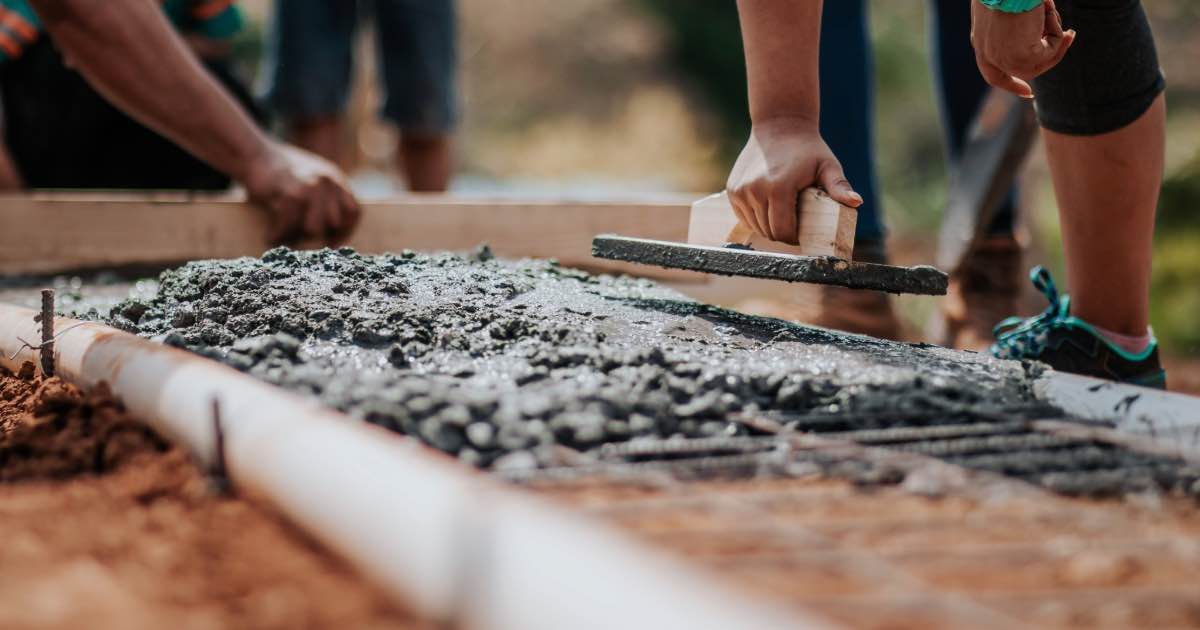
Before a single wheelbarrow of concrete shows up, the outcome of your project has mostly already been decided. It was decided by the dirt.
I say that to almost every homeowner who asks me why their neighbour’s garage pad heaved and cracked while another one down the street sat flat for twenty years. Same weather, same concrete, different result. The variable is the ground, and in Calgary the ground is complicated in two ways that matter enormously: our soil, and our frost. Patriarch Construction — Calgary’s 4th-Generation Concrete Contractor knows Concrete and can handle all your local concrete contracting.
Calgary Sits on Clay, and Clay Moves
A large share of Calgary is built on glaciolacustrine clay, sediment left behind by glacial lakes. Neighbourhoods vary, and there are pockets of sand and gravel, but if you’re digging in much of the city you’re likely hitting clay before long. Clay has one property that makes it a headache for anything you build on it: it’s expansive. It swells when it takes on water and shrinks when it dries out.
That means the ground under your slab is not a fixed platform. It’s more like a slow sponge. A wet spring saturates it and it swells upward. A dry summer pulls the moisture out and it shrinks back down. Over a year the surface can move noticeably, and it rarely moves evenly. One corner near a downspout stays wet and high, another corner dries and drops. That differential movement is what cracks concrete. Uniform movement a slab can often ride out. It’s the twisting, the one-corner-up-one-corner-down, that tears it apart.
This is why drainage around a slab or foundation is not a side issue in Calgary. It’s central. Every downspout dumping against the foundation, every patch of ground sloping back toward the house, is feeding water into clay that will swell and push. Get the water away from the structure and you take away most of the clay’s ability to misbehave.
Then There’s Frost, and It Goes Deep Here
The second problem is the frost line, the depth to which the ground freezes in winter. In Calgary that’s deep, and foundation footings need to sit below it. The standard here is that footings go down to roughly 1.2 metres, about four feet, to get beneath the frost.
Why does that matter so much? Because of frost heave. When the ground freezes, any water in it expands into ice. If there’s enough moisture and the freezing is happening under your footing, that expanding ice lifts the concrete. Come spring it thaws and settles, not always back to where it started. A footing placed too shallow, above or within the frost zone, gets lifted every winter and dropped every spring. That’s a foundation slowly being jacked apart by ice.
The combination is what makes Calgary unforgiving. Expansive clay that swells with moisture, plus deep seasonal frost that freezes that moisture and heaves it. A slab here is fighting a two-front war, and the design has to account for both.
Frost-protected Design and Why Footing Depth Is Not Optional
The reliable defence against frost heave is simple to state and expensive to skip: get the load-bearing concrete below the frost line and keep water from collecting under it. For a foundation, that means footings at the proper depth on undisturbed or properly compacted soil. For a garage pad or a shop floor, it means either going deep with thickened, reinforced edges or building a frost-protected shallow foundation with insulation that keeps the ground beneath from freezing in the first place.
Where I see trouble is with add-ons that skip this. A homeowner pours a quick slab for a shed or a garage without proper footings and without frost protection, on Calgary clay, and within a couple of winters it’s heaving and cracking. The concrete was fine. The design ignored the ground.
The Gravel Base Does More Than You Think
Under any good slab in this city sits a layer of compacted granular fill, and it earns its keep. A well-compacted gravel base does three jobs at once. It provides a stable, level platform so loads spread evenly. It drains water away from the underside of the slab so meltwater doesn’t pool against it and freeze. And it interrupts the capillary path that would otherwise wick groundwater up toward the concrete.
The base has to be the right material and it has to be actually compacted, in layers, not just dumped and raked. Compaction is one of those invisible steps that separates work that lasts from work that fails, because you can’t see whether it was done properly once the slab is on top. This is another reason the base and prep phase is where I’d want a homeowner paying the most attention, and asking the most questions.
Reinforcement: Rebar, Mesh, and Why Clay Demands It
On stable ground you can sometimes get away with a plain slab. On Calgary clay, reinforcement is cheap insurance against the movement you know is coming. Rebar or wire mesh doesn’t stop concrete from cracking, that’s a common misunderstanding, but it holds the slab together across a crack so it stays a single working surface instead of separating into pieces that then move independently and heave at different rates.
For a foundation, proper reinforcement in the footings and walls is doing the structural work of resisting the lateral pressure that saturated clay exerts. Hydrostatic pressure from wet clay against a basement wall is a real force, and it’s why foundation walls here are engineered, drained, and often protected with a weeping tile system and a dimple membrane. Water management again. Almost everything in Calgary foundation work comes back to controlling water.
Grading and Drainage: The Maintenance That Protects The Concrete
Once the concrete is in, the single most useful thing a homeowner can do is manage the water around it. That means grading the soil so it slopes away from the structure, ideally a drop of about six inches over the first ten feet. It means downspout extensions that carry roof water well clear of the foundation rather than dumping it at the base. It means not planting thirsty gardens right against the wall and soaking that clay all summer.
I’ve watched homeowners spend thousands fixing a heaved slab and then re-create the exact conditions that heaved it, because nobody connected the cracking to the downspout three feet away. The concrete and the water are the same story. You can’t treat one and ignore the other.
Basement Foundations Have Their Own Rules
Everything above applies to slabs, but a full basement foundation adds another layer of concern, because now you have a tall concrete wall holding back saturated, sometimes frozen clay. That clay exerts lateral pressure on the wall, and when it takes on water it pushes harder. Over years, unrelieved pressure is what bows and cracks basement walls, and it’s why foundation walls here are engineered rather than guessed.
The defence is a drainage system that keeps water from ever building up against the wall. Weeping tile, a perforated pipe run around the base of the footing in gravel, collects groundwater and carries it to a sump or to daylight before it can pressurize the wall. A dimple membrane against the exterior of the wall gives water a clear path down to that pipe and keeps it off the concrete. Damp-proofing or waterproofing coats the wall itself. None of these are optional luxuries in Calgary clay. They’re the system that keeps your basement dry and your wall straight, and when one part fails, water finds the weakness.
If you’re buying an older Calgary home, the foundation drainage is worth asking about specifically, because homes built before modern weeping-tile practice, or where the tile has silted up and failed, are the ones that develop chronic seepage and wall movement. Retrofitting drainage is disruptive and not cheap, but it’s a known fix, and it’s far better than watching a wall slowly bow.
How to Tell If The Soil Is The Real Problem
Homeowners often can’t see the difference between a concrete problem and a soil problem, but the pattern of damage usually tells the story. Cracking that’s uniform and fine is often just concrete shrinkage and aging. Damage that’s uneven, one corner heaved, one side sunk, doors in the house sticking, cracks that open in spring and close in summer, points at the ground moving underneath. Movement that tracks the seasons is the tell, because that’s the clay swelling with spring moisture and shrinking in the dry.
If you’re seeing that seasonal pattern, resurfacing or patching the concrete will not solve it, because the concrete isn’t the cause. The cause is water reaching the clay and the clay moving. Fix the drainage and grading, and often the movement slows dramatically. Skip that and any concrete repair is temporary.
Questions Worth Asking Before You Pour
If you’re getting quotes for a slab, a garage pad, or foundation work in Calgary, a few questions will tell you quickly whether a contractor is building for this ground or just pouring concrete. How deep are the footings going, and is that below frost. What’s the base material and how is it being compacted. How is water being kept away from and out from under the slab. What reinforcement is specified and why. Is the mix air-entrained for our freeze-thaw. A contractor who answers those clearly and specifically is thinking about Calgary. One who waves them off is going to leave you with a problem in a few winters.
Why This Matters More in Calgary Than Most Cities
It’s worth stepping back and naming why our ground is such a demanding place to pour. Plenty of Canadian cities have clay, and plenty have cold winters. Calgary has both at once, plus the chinooks that whip the temperature back and forth across freezing far more often than a steady-cold climate would. So the clay is being loaded with moisture and then frozen and thawed repeatedly, in the same season, on the same slab. A foundation here isn’t dealing with one stress, it’s dealing with several that compound each other. That’s why practices a contractor might get away with in a milder or drier place, a shallow footing, a thin base, casual drainage, catch up with them quickly in Calgary. The margin for shortcuts is smaller here, and the ground collects on them faster.
None of this means concrete work in Calgary is a gamble. It means the standards that matter, footing depth, base compaction, drainage, reinforcement, and an air-entrained mix, are non-negotiable rather than optional. Meet them and your slab or foundation behaves. Skip them and our ground will find the weakness.
Common Questions
How deep do footings need to go in Calgary? Below the frost line, which here means roughly 1.2 metres, about four feet. Anything shallower risks being lifted by frost heave every winter.
Why does my slab crack every spring and look fine by late summer? That seasonal pattern is the signature of expansive clay. It swells with spring meltwater, lifting the slab, then shrinks as it dries through summer. The fix is managing the water reaching the clay, not just patching the concrete.
Do I really need reinforcement on a small pad? On Calgary clay, yes. Rebar or mesh won’t stop a crack from forming, but it holds the slab together across a crack so it moves as one piece instead of separating and heaving unevenly.
None of this is meant to scare anyone off pouring concrete. Calgary is full of slabs and foundations that have stood flat and sound for decades, because they were built with the ground in mind. The point is that here, more than in gentler climates, the invisible work decides everything. If you’re planning foundation or slab work, it’s worth having an experienced Calgary concrete company assess your soil and drainage before you commit, because the cheapest time to solve a frost-heave problem is before the concrete is poured, not after it cracks.


