
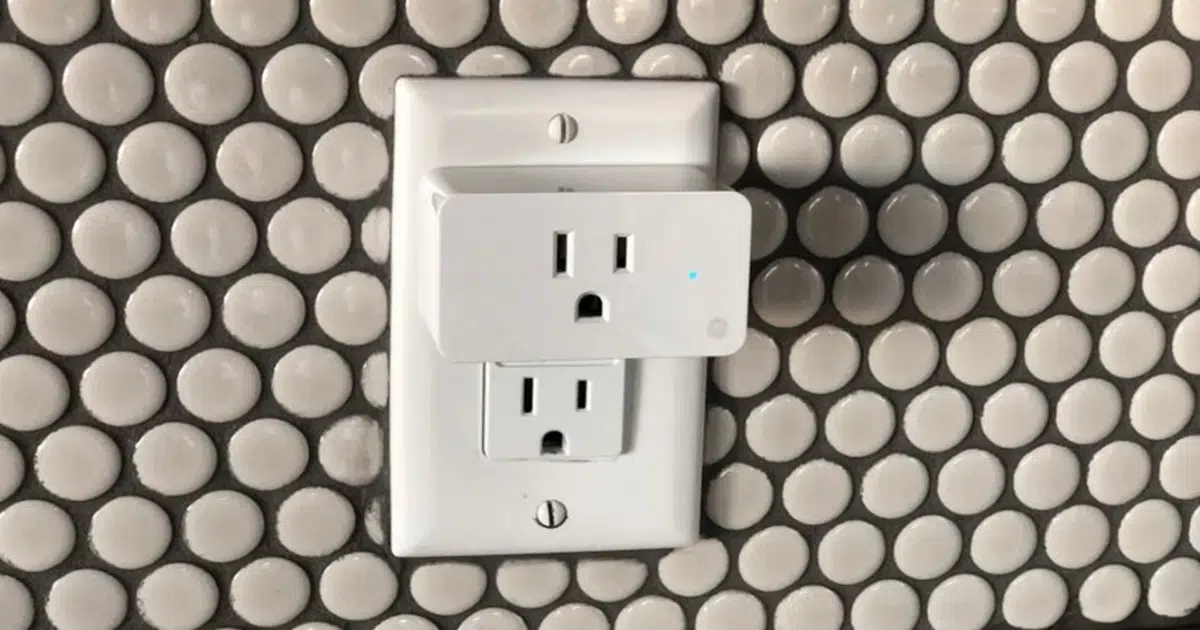
Most of us will see grounding holes on the bottom of our outlets. So, when we encounter an outlet that is flipped upside down, it’s natural to assume that someone did the installation incorrectly. However, many times, that flipped outlet is intentional. In many homes, an upside-down outlet serves as a visual cue that a particular receptacle is being controlled by a wall switch. It doesn’t mean that flipping an outlet automatically makes it a switch-controlled receptacle. It does indicate that you may come across this type of setup in a bedroom, living room, or older homes that don’t have a ceiling light.
What does an upside-down outlet usually represent?
An upside-down outlet typically represents a switched outlet. This means a wall switch controls the flow of electricity to the entire or partial portion of the receptacle. And usually to allow plugging in a lamp and then turning it on with the wall switch.
Flipped outlet orientations are commonly seen in rooms that weren’t originally designed with a built-in overhead light. Instead of installing a ceiling fixture, the builder chose to wire a switched receptacle. Plug a table lamp or floor lamp into the outlet, flip the wall switch, and your lamp operates similarly to how you’d use a room light.
Typically, only one half of the outlet is switched. One half is always on, and the other is turned on and off via the wall switch. Therefore, you can use the always-on portion for a clock, charger, etc., and use the switched portion for your lamp.
Flipped outlets serve as a visual cue
When an outlet is flipped over, it serves as a quick way to identify which outlet is switch-controlled. Homeowners, renters, electricians, and prospective buyers can quickly recognize that the flipped outlet may represent a switch-controlled outlet.

However, there is no national code mandating which way to install switch-controlled receptacles
Herein lies the important detail: flipping an outlet upside down does not always indicate that it is switch-controlled. In fact, there isn’t one nationwide code that states a switch-controlled receptacle must be installed upside down in residential settings. Outlet orientation, or the way the outlet faces, in residential settings is generally based on personal preference or local practices. Some electricians install the flipped position to indicate that the outlet is switch-controlled. Other electricians choose not to. In some instances, all of the outlets within a house may be installed in an upward-facing orientation due to the installer’s preference.
Additionally, there could be other reasons why an outlet was installed upside down. Maybe someone replaced a receptacle and simply installed it that way. Maybe it has absolutely nothing to do with any type of switch.
Therefore, when dealing with an upside-down outlet, consider this: it may be an indication of something. But there are no guarantees.
Testing a switch-controlled outlet safely
You don’t necessarily need to remove the cover plate or physically touch any wiring to determine if an outlet is switch-controlled. All you’ll need is a simple lamp. Plug the lamp into one half of the outlet and turn the lamp on. Now flip the adjacent wall switch. If the lamp turns on and off with the wall switch, you’ve identified the switched half. Try the other half of the outlet. Often, only one half of an outlet is switch-controlled. In many cases, only one plug on the outlet is switch-controlled.
If neither half of the outlet responds to the wall switch, it’s likely that the outlet itself is not switch-controlled. Perhaps the wall switch controls another outlet in the same room, or maybe it controls an outside light or even an overhead light. Or possibly the wiring configuration has changed since the last remodel.
Now is also a great opportunity to look around your room. Switch-controlled outlets are frequently located next to furniture where a lamp would normally be placed. For example, near sofas, bedsides, or corners where you would typically place a floor lamp.
Why do some electricians prefer installing ground-up outlets?
As mentioned earlier, “flipped” refers to an outlet installed upside down compared to its typical orientation. Many electricians place the grounding pin at the top for safety. If a plug is loose and a metal object falls behind it, it is more likely to contact the grounding pin before the energized prongs. This is one reason ground-up outlets are common in commercial and medical settings. However, most homeowners are used to outlets with the grounding hole at the bottom, and many plugs are designed with that orientation in mind. As a result, ground-up outlets often seem unusual, even though they work the same way.
Neither orientation automatically makes an outlet unsafe
Regardless of whether an outlet is installed upside down or right side up, whether it appears to face downward or upward, whether it uses round or square receptacles, or whether it uses GFCI protection, an outlet’s safety depends on many factors. These include proper wiring connections, appropriate grounding procedures, compliant installation practices, correct receptacle selection, and adherence to applicable electrical codes.

Don’t assume a dead outlet is broken
Switch-controlled outlets can be difficult to differentiate from broken outlets.
If nothing happens when you plug in a vacuum cleaner, charger, or lamp, check nearby wall switches before assuming the receptacle is dead. This is particularly true in bedrooms, living rooms, dens, and older homes.
Many times, a switch appears to be non-functional simply because it controls an outlet rather than a ceiling fixture. Sometimes previous owners don’t explain these types of installations, so they remain a mystery for years until someone replaces the receptacles.
Once you discover which outlet is switch-controlled, you may find it very useful. Plugging a floor lamp into that outlet allows for instant room lighting without having to use smart bulbs, remotes, or additional wiring.
Be careful when using multiple plugs on your power strip
If only half of the outlet is switched, be careful what you connect to each portion of the receptacle. The switched half should be reserved for lamps or other items you want to control with a wall switch. The always-on half should be used for devices you don’t want losing power, such as alarm clocks, routers, internet equipment, chargers, and similar devices.
Never overload an outlet, even if it seems convenient. Switched receptacles are still limited by the circuit and the outlet’s rated capacity. Large appliances, space heaters, and other high-wattage devices should always be used according to the manufacturer’s instructions.
In addition to following proper loading guidelines, if your plug feels loose, your outlet becomes excessively warm, or you notice burn marks, scorched plastic, or buzzing sounds from your switch, stop using the outlet and contact a licensed electrician to inspect the system.
Can I reverse my outlet to suit my personal preferences?
While it may seem appealing to simply reverse an outlet if its appearance bothers you, doing so involves much more than changing its orientation.
To flip an outlet around, you will need to work inside an electrical box. You must disconnect power at the main breaker panel and verify there are no energized wires using an approved tester. You will also need to reconnect the wiring correctly and ensure all connections are secure to help prevent fire and electrical shock hazards. Furthermore, if you’re reversing an existing half-switched receptacle, you’ll need to ensure your changes don’t disrupt service to other components on the circuit. Including GFCI-protected circuits or multi-wire branch circuits.
Because of these potential risks, unless you’re specifically trained in electrical work and have experience working with electrical systems, it is highly recommended that you have a licensed electrician confirm that your outlets are properly wired, installed, and safe.
Also note that working in older homes or rental properties may require permission from landlords or property managers before performing any electrical modifications, even minor cosmetic ones.

A little-known secret about your house
The flipped outlet orientation can provide insight into other aspects of your home. When you learn about the possible implications associated with flipped outlets, you’ll begin to notice them everywhere as clues pointing toward different aspects of your home’s design and functionality.
In general, flipped outlets may indicate switch-controlled receptacles in areas intended for lighting, although this is not universally true. Always test flipped outlets safely with a lamp before drawing conclusions about the wiring configuration.


