
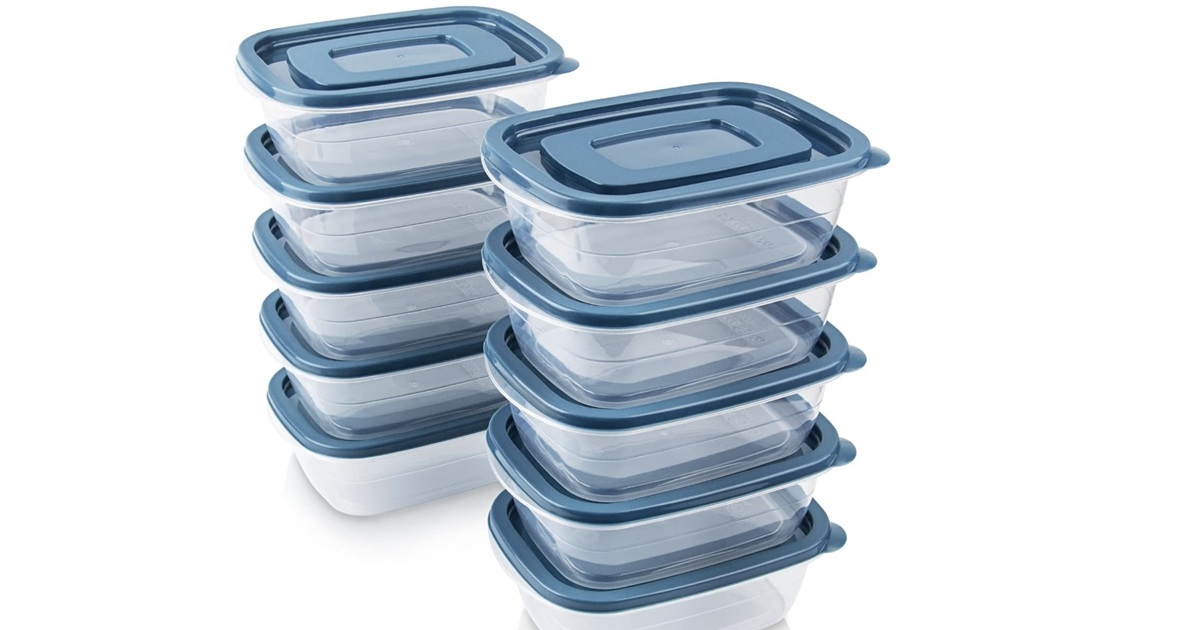
The other night I stood at the microwave holding a battered takeout tub, squinting at the underside like it owed me money. There was a cluster of tiny stamped marks down there. Some little wavy lines, a triangle with a number, a shape I couldn’t quite make out. I had no idea if it was safe to reheat my leftovers or if I was about to melt dinner into the plastic. That little moment is exactly why food container symbols are worth learning. They can tell you what the plastic is made of, how hot it can go, and whether it belongs anywhere near your food at all.
The Fork and Glass Symbol: Is It Food Safe?
The most useful mark to spot first is the little cup and fork, sometimes drawn as a fork beside a wine glass. It means the material is approved for direct contact with food. Simple as that. The plastic won’t leach anything nasty into whatever you store in it under normal use.
This matters because not every plastic is made with food in mind. Plenty of tubs and packaging are built for hardware, cosmetics, or general storage, and those aren’t held to the same standard. So when you’re picking a container for actual food, the fork-and-glass is the green light you want.
One thing worth clearing up. A missing food-safe symbol doesn’t automatically mean the container is dangerous. Some perfectly fine containers just never got the mark stamped on. But for anything you’re storing meals in, I’d rather see it than guess. Food-grade is the label to aim for.
Microwave, Freezer and Dishwasher Symbols
After the food-safe mark, these three are the ones you’ll reach for most.
The wavy lines, usually two or three little squiggles, mean the container is microwave safe. That tells you the plastic can handle reheating without warping or breaking down. It does not mean your food will heat evenly, and it doesn’t turn a flimsy tub into a casserole dish. It just means the material tolerates the heat.

A snowflake means freezer safe. The plastic stays stable at low temperatures and won’t crack or shatter when it gets cold and brittle. Handy to know before you stack tomorrow’s soup in the deep freeze.
The dish under falling water drops, or a little dishwasher rack icon, means dishwasher safe. Read this one closely, because it’s often top-rack only. The bottom rack sits closer to the heating element, and that extra heat can warp lids and cups that were only cleared for the top.
Back to my microwave standoff. Here’s the warning I learned: if there’s no wavy-lines symbol at all, don’t nuke it. When the stamp is too faded to read or simply isn’t there, treat that as a no. It takes ten seconds to tip your food onto a plate instead, and a plate never melts.
The Recycling Numbers 1 to 7 Explained
That little triangle of chasing arrows with a number inside trips people up constantly. It’s called the resin identification code, and here’s the part most folks miss: it tells you the type of plastic, not whether your local program actually recycles it. Two different jobs.
Here’s the quick rundown of what shows up on food storage and what it means.
- 1 (PET) is your single-use water and soda bottles. Fine once, not built to be refilled and reheated for months.
- 2 (HDPE) is sturdier and widely considered food-safe. Think milk jugs and heavier bottles.
- 4 (LDPE) turns up in squeezable bottles and some bags and film.
- 5 (PP) is the workhorse of reusable food storage. It’s heat-tolerant and generally microwave-friendly, which is why so many good containers carry it.
The numbers people tend to flag for reuse and heating are 3, 6, and 7. Number 3 is PVC, 6 is PS or polystyrene (the foamy takeout stuff), and 7 is the catch-all “other” category that can include polycarbonate. These aren’t the ones I reach for when I want to store and reheat food regularly.
So if you’re shopping for reusable containers, the number to look for on the bottom is 5. It’s the one that plays nicest with both the microwave and repeated washing. When you’re deciding whether to reuse a takeout tub, that number on the base is your first clue.

BPA-Free and Other Marks Worth Knowing
You’ll often see a “BPA-free” label, sometimes with a crossed-out BPA. It simply means the plastic was made without bisphenol A, a compound some shoppers prefer to avoid. It’s a manufacturing note, nothing more, and it’s become a common selling point on reusable containers.
Worth untangling from the resin triangle is the Mobius loop, the plain three-arrow recycling symbol with no number. That one signals the product is recyclable in general, while the numbered triangle identifies the specific plastic. Similar shapes, different messages.
And don’t confuse your storage tubs with grocery packaging. Certification and quality marks like organic labels live on food packaging, not on the container you scoop leftovers into. If you spot one on a tub, it wandered over from somewhere else.
How to Read Your Own Containers
My routine now takes about five seconds. Flip the container over. Look for the fork-and-glass first, then the microwave and freezer icons, then the number in the triangle. Do that before you reheat or freeze, not after.
And when the stamp is so faded you’re basically reading braille, that’s your answer right there. When in doubt, tip the food onto a plate or move it into a container you know is safe. A worn-out symbol you can’t quite make out is not worth risking your dinner over.


