
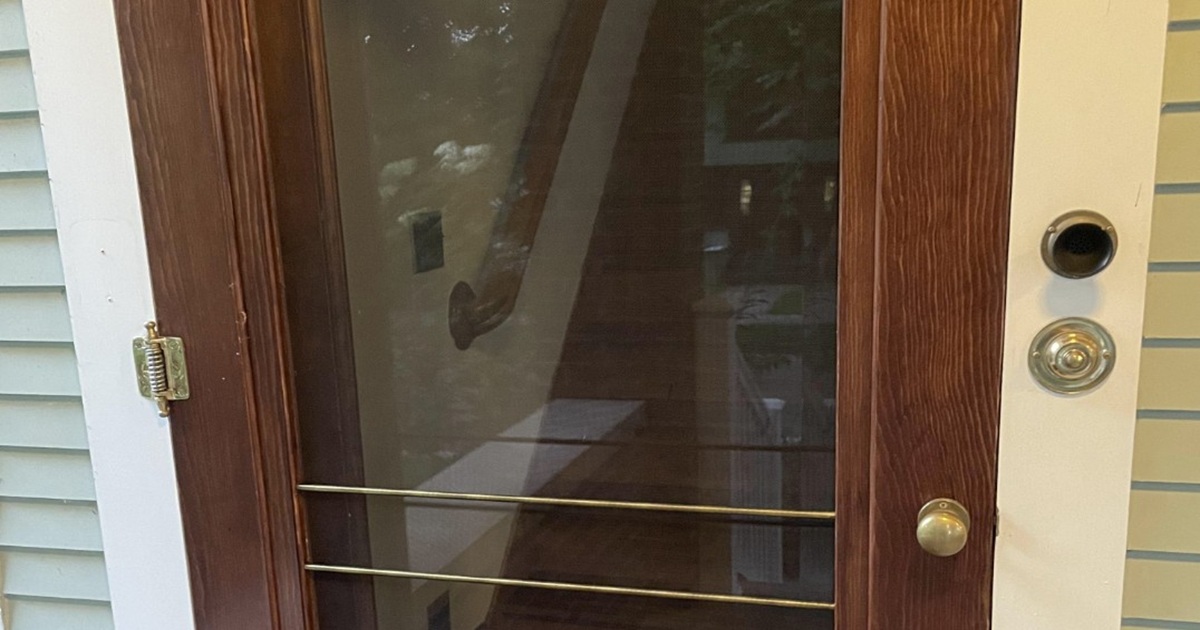
Those narrow tubes running through the walls of an old house are almost certainly speaking tubes, a room-to-room voice system people used before electric intercoms. That is the short answer. The part that trips people up is what they look like. A capped metal fitting poking out of the plaster reads as plumbing, gas line, or old wiring conduit. It carried none of those. It carried your voice.
Speaking tubes turn up most in homes from roughly the late 1800s to the early 1900s. If your house is from that stretch and you keep finding a small, hollow tube with a flared or capped end mid-wall, plumbing is usually the first guess. It is also usually wrong. No water, no current. Just a hollow line for talking.
How Speaking Tubes Actually Worked
The idea is almost stubbornly simple. Sound travels down a hollow tube from one mouthpiece to another. That is the whole machine. Basic speaking tubes operated without electricity, batteries, or anything to plug in. The tube ran between floors or between distant rooms, with a mouthpiece fitting at each end.
Here is the clever bit. Before you could talk, you had to get the other person’s attention. Many tubes had a whistle built into the mouthpiece. You put your lips to the end and blew, and it made a sound a bit like a tea kettle at the far end. That was the signal. The person on the other side would open the valve, put their ear to their mouthpiece, and you were connected.
Then you talked. One person speaks into their end, the other listens at theirs, and you take turns. It was strictly two-way, so each pair of rooms needed its own dedicated line. No switchboard, no dialing. If you wanted to reach three rooms, you ran three tubes. People who still have working ones say the sound carries eerily well when you get your ear right up to the cup.
Why Old Houses Had Them
Before telephones were everywhere and long before household intercoms, a big house had a real communication problem. The kitchen and the servants’ work areas sat well away from the living quarters, often on a different floor. Shouting down a staircase only gets you so far.
An early fix was a string that rang a bell in another room, but a bell can only say so much. You cannot explain anything with a bell. A tube let you actually speak, which was a genuine upgrade. So they showed up mainly in larger, wealthier period homes, used to summon staff or to talk between floors that were otherwise cut off from one another.
Worth saying plainly: these were common in that class of home, not standard in every house on the block. A modest cottage from the same decade may never have had one. The tube system was a feature of grander homes of the era, the kind with distinct service areas. When telephones spread, the tubes quietly went obsolete.
How to Tell a Speaking Tube From a Pipe or Chute
The visible end is the giveaway. A speaking tube usually shows up as a small mouthpiece fitting, often brass, sometimes sitting flush in the wall, sometimes with a little whistle cap. The bore is narrow, much narrower than any plumbing you would find in a wall.
A few tells that point to a speaking tube rather than a pipe:
- A small mouthpiece or cup fitting, often brass, sometimes capped
- Mostly a narrow inner bore, far skinnier than a water or drain pipe (but keep in mind that they varied in size, with the diameter depending on the system and installation.)
- A matching opening somewhere else in the house, since the tube always had two ends
- No connection to a fixture, a tap, a radiator, or a meter
That paired-opening clue is the strongest one. If you find a mysterious fitting upstairs, go looking for its twin near an old kitchen or entryway. A gas line dead-ends at an appliance. A laundry chute is far wider, wide enough to drop clothes down. Old wiring runs to a box or a switch. A speaking tube just runs to another mouthpiece and stops.

Other Odd Things People Find in Old Walls
A speaking tube is only one of the surprises an old house hands you. Renovation crews turn up all sorts of things tucked into cavities and behind plaster. Old newspapers stuffed in for insulation. A forgotten hammer. Square nails, spent bottles, small toys, the odd time capsule left by a previous remodel.
Some finds are stranger than others, and a few make you step back before you reach in. If you like a good renovation mystery, an old fitting hidden in a wall can send you down a real rabbit hole. Just keep this category separate in your head. A tube with a mouthpiece is almost never in the same bucket as a random buried object.
Should You Keep the Tube?
I once helped a friend pull trim off an upstairs wall and found a little capped brass fitting sitting there, no pipe behind it, no wire, just this stubby cup flush in the plaster. We stood there guessing for a good ten minutes before the word tube even came up. It felt like the house was trying to tell us something.
If yours is intact, leave it be. A speaking tube is a genuine period feature, and plenty of owners cap or preserve them instead of ripping them out. Even a silent one is a fun talking point. What you are looking at is a small brass mouthpiece set flush in the plaster, a working phone line from before the phone.


